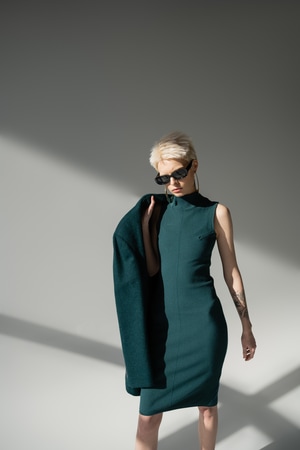
I have a confession that may get me banned from the Fashion Editor Club. Until recently, I have owned ZERO BROWN CLOTHES. No chocolate, no caramel, no coffee, no nutmeg, no cognac, etc. Just nothing. My closet is basically black, navy and the occasional electric blue that I pull out when I’m feeling wild. Brown has never really registered on my radar, or if it has, I’ve made a conscious effort to avoid it.
I could defend myself by stating that I’m from the 1990’s and during that time, brown was decidedly NOT COOL UNLESS YOU WERE A UPS DRIVER OR IN TO THAT “NATURAL GRANOLA” THING. My teenage fashion influences were Clueless bright plaid and Calvin Klein minimalism. While I was in fashion school, brown was that colour you used when you ran out of ideas – the sartorial equivalent of giving up. “Brown is for shoes and bags,” my first fashion director told me. “It looks cheap on clothes.”
How wonderfully WRONG SHE WAS!
Fast forward 15 years and I’m now in the midst of a career in fashion and I’m drawn to a colour I previously rejected as the most dull colour in the Crayola box.
Not just ANY brown, but a very specific shade of brown. One that I previously would have physically recoiled at the sight of: muddy, murky, slightly greenish brown. The kind of brown that has no sexy marketing name like “Espresso” or “Amber”. We’re talking ACTUAL MUD BROWN. The colour of, well, dirt.
This shade of brown first popped up at a Proenza Schouler show in February. They referred to it in the show notes as “Umber”, however my brain immediately categorized it as “Swamp Water.” To my surprise, instead of appearing drab and depressing, it looked CHIC. Elegant. Like liquid gold draped around the model. I spent several days after the show ruminating about that muddy brown suit. Which was definitely not the response I anticipated.
Then it appeared at Bottega Veneta. Then at The Row. Then suddenly it was EVERYWHERE — not just on the runway but on the coolest person at every industry event I attended this spring. My friend Emma is a stylist with an almost supernatural ability to predict trends. When she arrived at dinner in a muddy brown oversized sweater that made her look like she belonged in a high-end home furnishings catalogue, I commented on it. Her response? “It’s just brown,” she said casually, as if she hadn’t just taken the world’s most unexciting colour and turned it into a style choice.
The final nail in the coffin came when I visited my 68-year-old neighbour Diane. Diane is a textile designer who has been designing textiles for decades longer than I have existed. She answered the door wearing a muddy brown linen dress that made her silver hair look intentional. “Oh this?” she replied when I complimented her. “I’ve had this since the 70’s. Brown always comes back when people get tired of trying too hard.”
When she said that, it resonated with me. It perfectly summed up why this particular shade of brown feels so right for this moment. After years of dopamine dressing, vibrant maximalism and look-at-me fashion, there is something refreshingly rebellious about embracing a colour that refuses to draw attention to itself.
The next day I did something I’d never done before. I went shopping specifically for brown clothes. Not the safe browns – no camel, no chocolate, etc. I wanted that weird, murky, slightly unsettling brown that had haunted my fashion dreams. The sales associate at Dover Street Market actually LAUGHED when I described what I was looking for. “Oh you mean ‘Bog Brown,’” she said. “We call it that. It’s been selling out as soon as we get it.”
Bog Brown. PERFECT. Even the name sounds a little ominous – like stepping into something that could suck you under. And yet somehow it’s become the colour that sophisticated fashion people are embracing with great enthusiasm.
I left with a bog brown oversized button-down that cost more than my first month’s rent in NYC (Don’t tell my Dad – He still thinks fashion editors earn a living wage). I wore it to the office the next day. The responses were instant and telling. My 24 year old social media manager wrinkled her nose: “Is that…brown?” Meanwhile Katherine, our editor-in-chief who has impeccable taste and rarely comments on anyone’s appearance, came over to my desk to comment: “That colour is perfect on you.” I’ve worked with Katherine for 7 years and prior to this the most she’s ever commented on my appearance is “Nice Haircut” when I got an 8-inch cut last summer.
Since then I’ve become somewhat of a bog brown evangelist. I’ve gradually added pieces of this previously ignored shade to my wardrobe. A sweater here, a pair of wide-leg trousers there. Last week I went full commitment with a bog brown dress. My Mom described it as “Interesting” in the same tone she usually reserves for my dating choices.
What I’ve discovered is that this “ugly” brown is actually quite sophisticated simply because it’s so unexpected. It’s not attempting to be pretty or flattering in the traditional sense. It’s a colour that says “I’m not wearing this to impress you with how pretty I am.” There is a certain level of confidence to that choice that reads as immediately chic.
The trick to pulling it off, I’ve found, is to commit completely. This isn’t a colour that works as a timid accent piece. The bog brown cardigan I purchased and attempted to wear with my usual black jeans looked like I had shrunk a chocolate sweater in the wash. But the full bog brown outfit? Now I was getting stopped by fashionable strangers asking me where I got “that perfect brown”.
The other key is quality. Since the colour is so unassuming, the texture and fit become even more important. Cheap fabric in bog brown just looks sad, like something you’d find on the clearance rack in 1974. However, in a beautiful linen, a crisp poplin or a soft cashmere? It becomes the epitome of luxury. That’s why The Row has jumped on board this trend so enthusiastically – it exemplifies their quiet, money-whispering approach to fashion perfectly.
One of the most fascinating aspects of this trend is its universal flattering capabilities, despite being a colour that nobody would describe as “Pretty.” On my friend Jade, who has gorgeous deep brown skin, bog brown creates this beautiful tonal effect that looks incredibly polished. On Emma’s pale complexion, it adds warmth without being as harsh as black. My colleague Tyler, who has dark red hair that makes many colours appear garish on him, discovered that bog brown is one of the most flattering shades he can wear.
The secret is to determine the correct undertone for your skin. Bog brown can lean slightly greenish or slightly reddish. The greenish version typically works well on people with olive or golden undertones. The reddish version typically complements those with rosy or neutral undertones. The depth of the colour can also be adjusted – deeper for a more dramatic look, slightly lighter for a softer look.
I’ve also found that bog brown works surprisingly well with other colours. It pairs nicely with cream or ivory to create a subtle contrast that doesn’t have the harsh edge of black and white. It looks fresh with pale pink – not the obvious chocolate and strawberry combination, but something more sophisticated. And it pairs perfectly with that slightly acidic chartreuse that has been everywhere lately, creating a nature-inspired palette that somehow feels both organic and completely modern.
My favorite way to wear it is with different shades of itself – the brown-on-brown approach that feels like the 2024 iteration of the camel monochromatic looks that dominated a few years ago. There’s something so pleasing about the subtle transitions between slightly different browns, creating depth without obvious contrast.
The fashion industry’s acceptance of bog brown appears to be part of a broader movement toward what I’ll refer to as “anti-pretty” aesthetics. For a long time, fashion has been focused on enhancing conventional beauty – colours that bring out your eyes or flatter your complexion, silhouettes that emphasize or create curves in the “right” places. But increasingly, the most interesting fashion is challenging these very notions of what’s “flattering” or “pretty.”
Bog brown won’t immediately illuminate your face or cause strangers to exclaim over how gorgeous the colour is. What it will do is indicate that your relationship with fashion extends beyond the obvious. It’s a colour for people who are comfortable with complexity, who don’t need their choices to be easily understood or immediately appreciated.
Last week I wore my bog brown dress to an industry event and found myself standing next to a supermodel known for her bold, attention grabbing style.
She took a good long look at me and asked “Is that The Row?” (It wasn’t – it was a less expensive brand that I won’t mention because I wouldn’t want them to sell out before I can purchase another one). However, her question indicated something significant. Bog brown reads as expensive, as intentional, as fashion with a capital F.
If you are interested but hesitant to take the leap into the bog (Sorry – couldn’t resist), I would suggest beginning with accessories. A bog brown leather handbag provides all the functionality of black but feels more current. Bog brown boots work with everything but lack the obviousness of black. Even a bog brown scarf can provide an unexpected element to an otherwise normal outfit.
For the more adventurous, an oversized bog brown shirt worn open over a white tank and your favorite jeans is a relatively easy place to start. Or try a pair of bog brown trousers with a cream-colored sweater for a subtle twist on neutral dressing. As someone who began my brown journey just a few months ago and is now considering bog brown leather pants (Pray for my credit card), I can attest that this colour has a way of growing on you.
The benefit of this trend is that, like so many other fashion trends that feel exciting but ephemeral, bog brown has the potential to evolve into a long-term staple in your wardrobe. It’s not screaming for attention or bound to a specific cultural phenomenon that will rapidly date. It’s just quietly, confidently itself – the sartorial equivalent of the most intriguing person at a party who doesn’t need to speak loudly to be heard.
So here’s to bog brown, the colour I never thought I would love, the shade that defies conventional attractiveness yet somehow presents itself as the most sophisticated option in a world of obvious choices. At times the most compelling elements in fashion, as in life, are the ones that do not attempt to present themselves in the manner expected, but instead provide something more compelling – a form of beauty that reveals itself gradually, rewarding the second glance, the closer examination, the ability to perceive beyond initial impressions. And aren’t those characteristics what define true style?