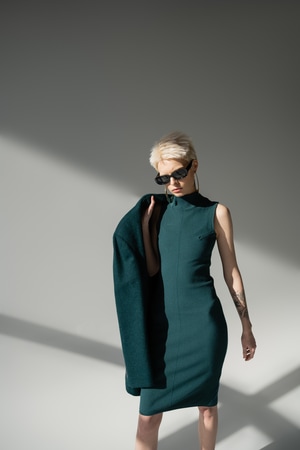
I am going to be completely honest — I shop at Primark more often than anyone with a salary as high as mine probably should. So, there. When you’re working to maintain a professional wardrobe on a finance salary that’s decent, but not “I’m going to drop $300 on a blazer and not bat an eye” good, you start to get creative. What I mean by creative is that I’ve become a complete expert at turning a $15 dress into something that I could have easily purchased at COS.
Last month, I was running to grab lunch between meetings in the Financial District and ran into Sarah from our compliance team. She complimented my outfit – a black sheath dress that I had belted, along with a couple of simple gold pieces. “That’s such a classic piece,” she said. “Where did you get it?” I mumbled something vague about owning it for forever. Honestly, how would you tell a colleague that your entire outfit cost less than her Starbucks habit?
The dress was from Primark. Twelve pounds. I spent money on the belt that made the whole thing work.
After years of figuring out how to create a professional wardrobe on a budget that’s…well, let’s just say it’s not limitless, here’s what I’ve determined. You can definitely build a professional wardrobe without breaking the bank, but you have to think strategically about where you spend your money. And accessories – good accessories – are what separate the “it looks like I’m clearly shopping on a budget” look from the “she has great taste.”
I learned this the hard way my first year out of business school. I was so concerned about purchasing multiple “professional” pieces of clothing that I spread my money too thin and ultimately had a closet full of mediocrity. Cheap blazers that looked cheap. Shoes that killed my feet. Bags that fell apart after three months. This is when my mom sat me down and told me, “Buy fewer things, baby. But buy them better. One good belt will do more for your wardrobe than five okay dresses.”
She wasn’t wrong. That woman has been making smart wardrobe investments since before I was born. She’s the reason I understand the difference between looking expensive and spending a ton of money.
So, my go-to strategy? I purchase basics from places like Primark, Zara and even Target when I’m visiting my family in Atlanta. Then I invest in accessories that take everything to the next level. For example, a really good belt – and I mean really good, not just “okay-looking-from-far-away” – can turn a shapeless dress into something that looks like it was intentionally styled.
I was wearing that belt when Sarah complimented my outfit. It cost me $85 from Cuyana three years ago. I know that seems like a lot of money for a belt. However, if you factor in cost-per-wear, I’ve worn this belt at least twice a week for three years. It’s made probably 50 different cheap dresses look like actual investment pieces. At this point, the math is ridiculous – 30 cents per wear.
It’s a simple cognac leather with a small gold buckle. Nothing flashy or trendy that will look dated in two years. The leather has actually improved with age. Which is what happens when you purchase quality versus just the cheapest option available. I’ve worn it with everything from Primark shift dresses to my one expensive Theory blazer. And it makes everything look more expensive by association.
Another place I’ve learned to spend money strategically is in jewelry. I have a small collection of gold pieces – none of which are particularly fancy, mostly from brands like Mejuri or Aurate when they are on sale – that I combine and match with everything. Gold hoops. A delicate chain necklace. A classic watch with a leather band. These are the items that make my Target blouses look deliberate, not desperate.
I think my watch may have been my best investment. I found it at Nordstrom Rack for $120, which was discounted from something significantly higher. It’s a white face with a brown leather strap. It’s expensive enough that people think I chose the rest of my outfit just as carefully. I wear it every single day. And it’s lasted me for two years now.
My jewelry strategy is essentially applying capsule wardrobe philosophy to accessories. A few excellent pieces that complement everything instead of numerous trendy items that only fit certain outfits. I can make a basic black dress from Primark look like I’m ready for a board meeting just by adding my watch, small gold hoops, and that belt. Total outfit cost may be $30 for the clothing. But it looks like I spent 10 times that.
Shoes are more difficult because inexpensive shoes truly do look inexpensive. I learned this lesson the hard way during my first year in Boston. I attempted to survive on $40 pumps from Target. My poor feet paid the price. And the shoes looked horrible within about a month of commuting on the T.
Now, I purchase fewer pairs of shoes but I spend more on each pair. I currently have three pairs of work shoes that I rotate – black pumps, nude pumps, and black loafers. Each pair costs anywhere from $150 to $200. Sounds expensive. But when you consider that I wear these shoes almost every day and they still look good after two years. The black pumps are from Cole Haan. And they are actually comfortable enough for a long day of meetings followed by happy hour.
My handbag strategy follows the exact same reasoning. Instead of purchasing many low-cost handbags that quickly deteriorate, I invested in two extremely good ones – a black leather tote for work and a smaller cross-body for evening/weekend activities. The tote cost $280 from Everlane. Which seemed outrageous at the time. However, I have carried this bag almost every day for the past three years. It still looks brand-new. Holds everything I need for work. And makes whatever I’m wearing look more polished.
One of the challenges of being a Black woman in corporate finance is that everything I wear is scrutinized differently. I can’t wear too trendy, too casual, too anything, really. Everything I accessorize has to walk the tightrope of being polished yet approachable. Being professional yet not boring. It’s exhausting. To be frank. But quality accessories help me achieve that balance more frequently.
When I started my current job, my first week of work was filled with what I thought was an appropriate outfit. Navy blue dress from Zara. Basic black ballet flats. No jewelry. Professional enough, right? Wrong. I looked…forgettable. Unremarkable. Like I was attempting to disappear rather than excel. My boss (who is an amazing person and has turned into a mentor) took me aside after work and suggested I “put a little personality” in my wardrobe.
That’s when I realised that in corporate America, especially for women of colour, your accessories are not simply accessories. They are a significant aspect of your professional image. Certain items can convey confidence. Attention to detail. Success. It’s not fair that we have to think about this stuff. But we do.
I think my scarves have been a revelation in terms of providing the “personality” that doesn’t overwhelm. I have a number of silk squares – some from estate sales, others from brands like Everlane or & Other Stories – that I wear either wrapped around my neck or as headbands. These add a splash of colour and interest to basic outfits without drawing attention away from the rest of your attire in meetings.
One of my favorite vintage scarves is a vintage Hermès scarf I discovered at an estate sale in Beacon Hill for $45. It’s probably from the ‘80s. The print is a beautiful gold and navy chain design. When I wear it with a plain white button-down and black pants (both from Uniqlo), people assume the entire outfit is expensive. The scarf does all of the heavy lifting.
While sunglasses may seem like a strange item to invest in for professional purposes, think about it. You wear them walking to and from the office. During your lunch break. On business trips. Good sunglasses provide the appearance of being put together whether you’re running errands or attending a conference. I spent $150 on a pair of classic Ray-Bans – Wayfarer style – two years ago. They’ve been worth every penny. They go with everything. And they never appear outdated.
Hair accessories are back in vogue. And they’re ideal for adding polish to simple outfits. I have a large collection of hair clips and headbands – mostly from Machete or Jenny Bird when they offer sales – that can make a basic ponytail look intentional and fashionable. When I’m having a bad hair day. Or I’m running late. A nice hair clip can rescue my entire look.
The principle behind all of this is purchasing items that work well together and with various other outfits. Every accessory I invest in has to pass what I refer to as the “five-outfit test”. Can I instantly come up with five different ways to wear it? If not, I’m not purchasing it, regardless of how much I love it in the moment.
Currently, my obsession is a gold chain necklace from Mejuri that I waited for and purchased during their holiday sale. It was $180. Which is insane for a necklace. But I wear it with everything. Over turtlenecks. Under blazer lapels. With simple t-shirts on the weekends. It makes every outfit look more expensive. And more polished.
I also want to mention bags once again. Because they are probably the most scrutinized accessory in a professional environment. Your bag says a lot about you. Are you organised? Do you care about details? Can you afford quality items? I know it’s shallow. But it matters in the world of corporate.
In terms of bags, I believe the best investment I ever made was actually a vintage Coach tote I discovered on The Real Real for $120. It was from the ‘90s. When Coach still manufactured everything in the United States. The leather quality is exceptional. I receive compliments on it constantly. And it has endured daily commutes for two years.
Plus, there’s something to be said for carrying a bag with history. Rather than trying to look expensive.