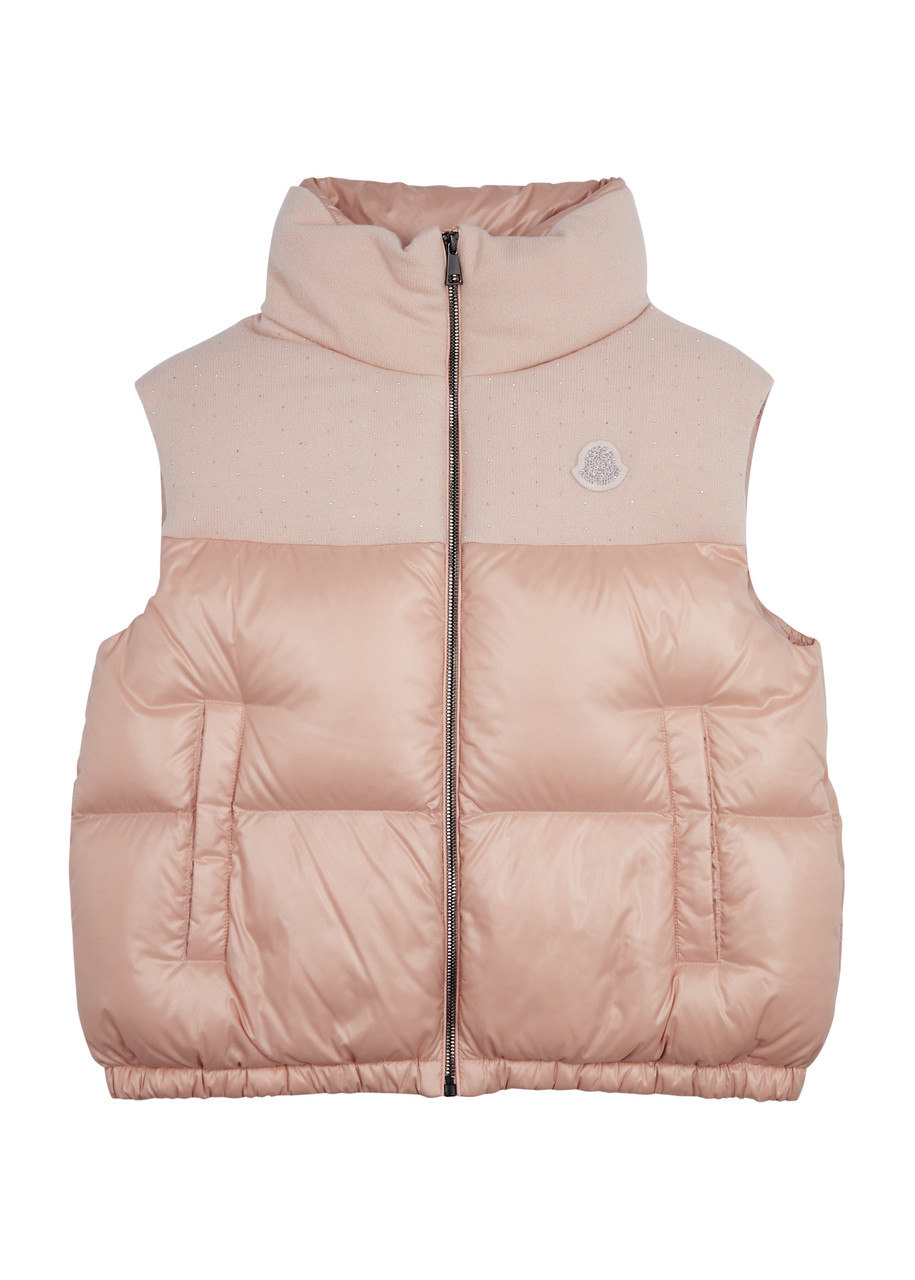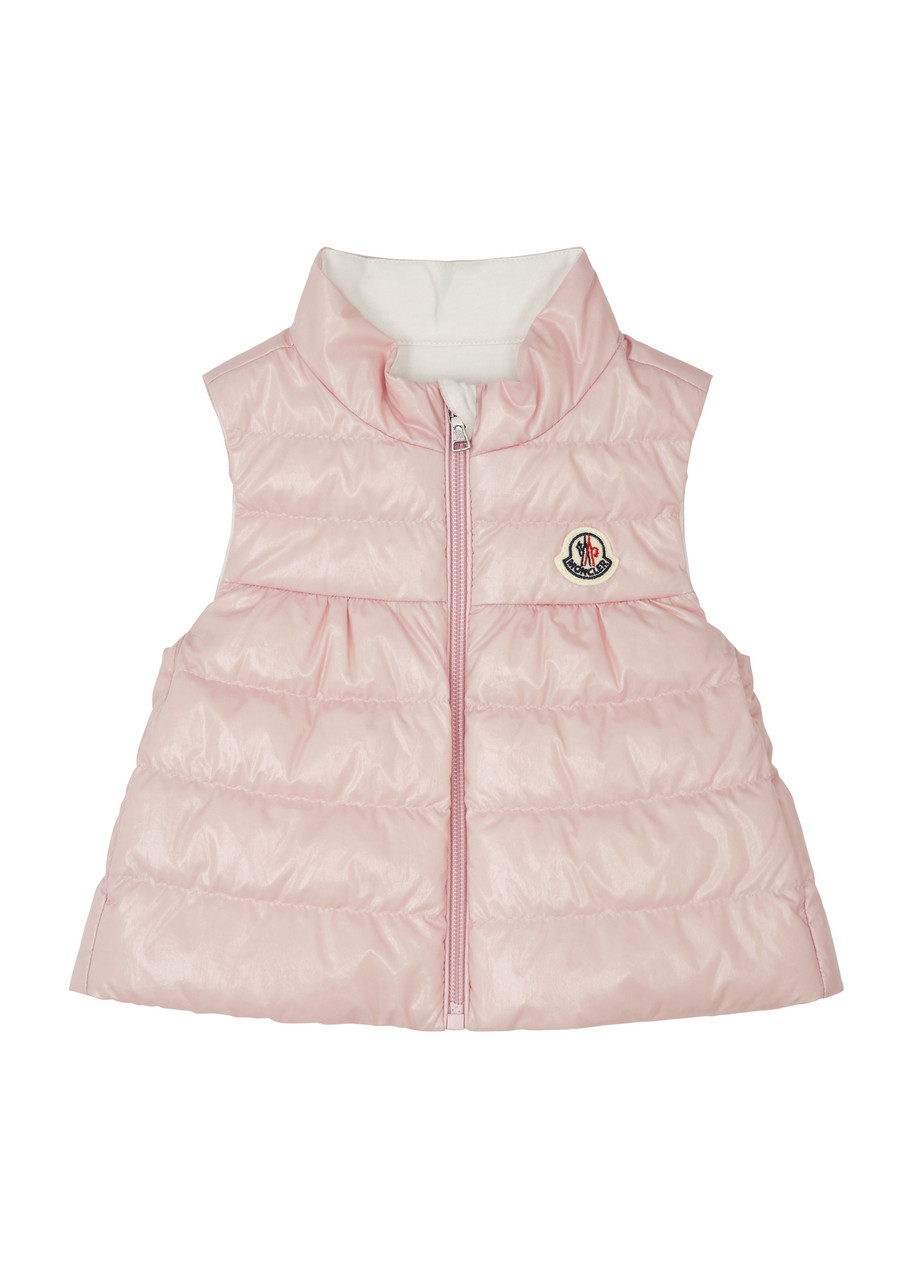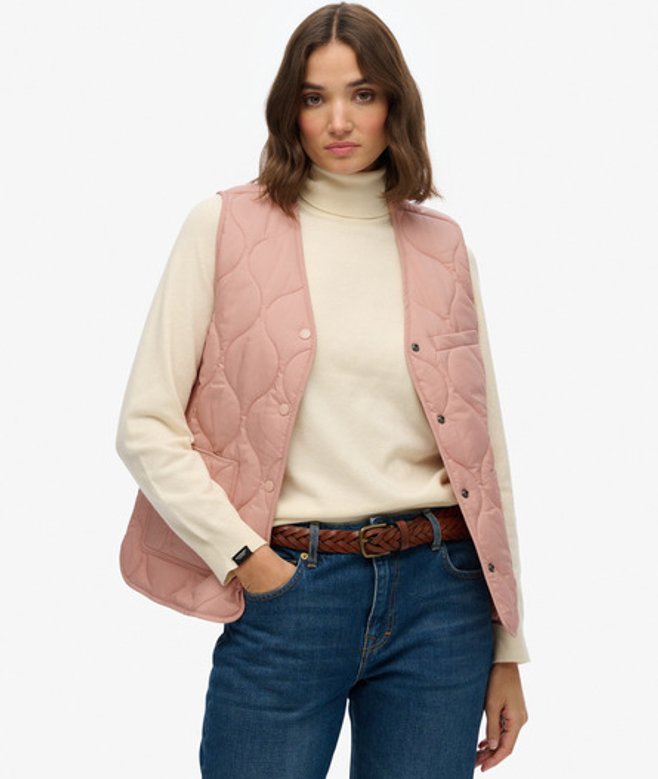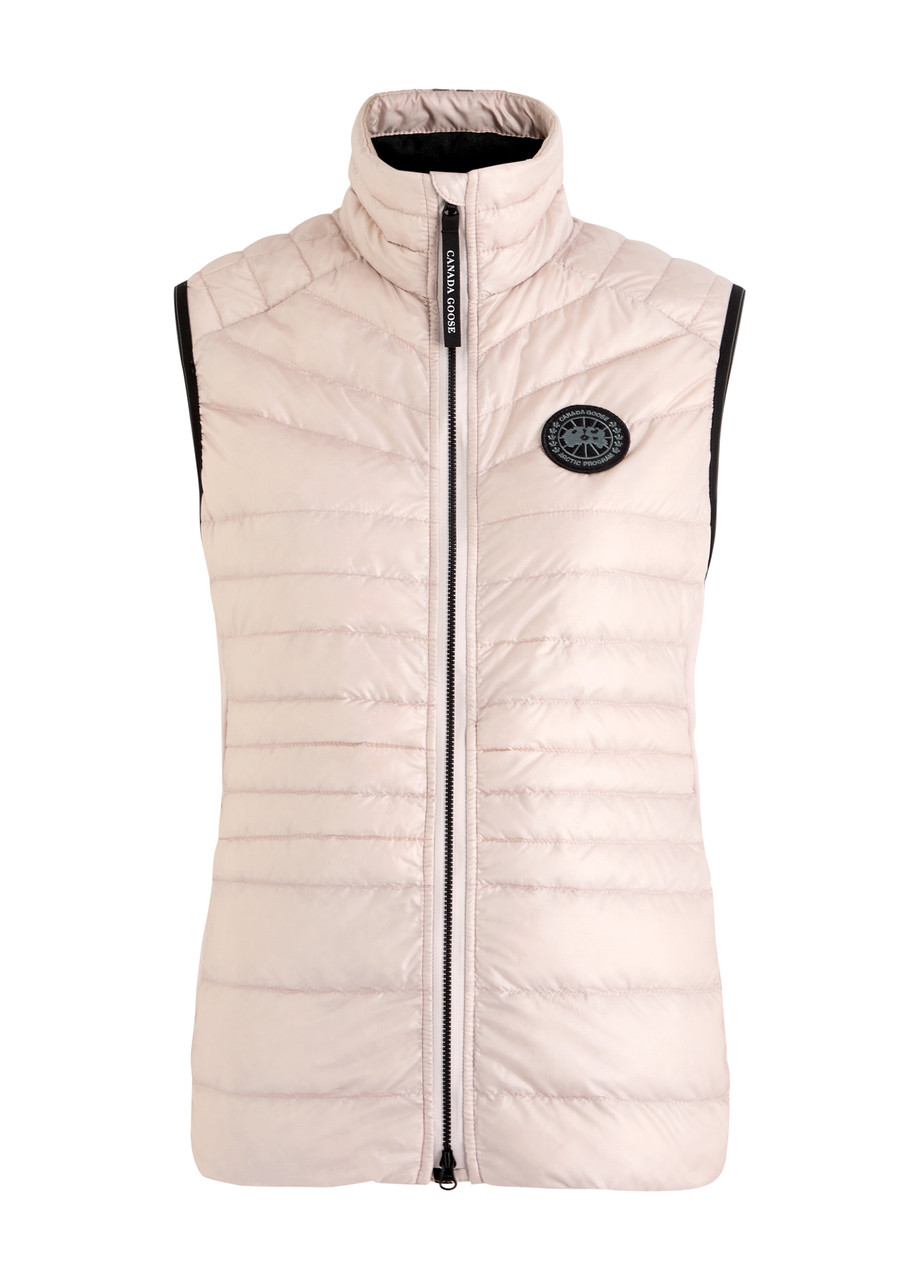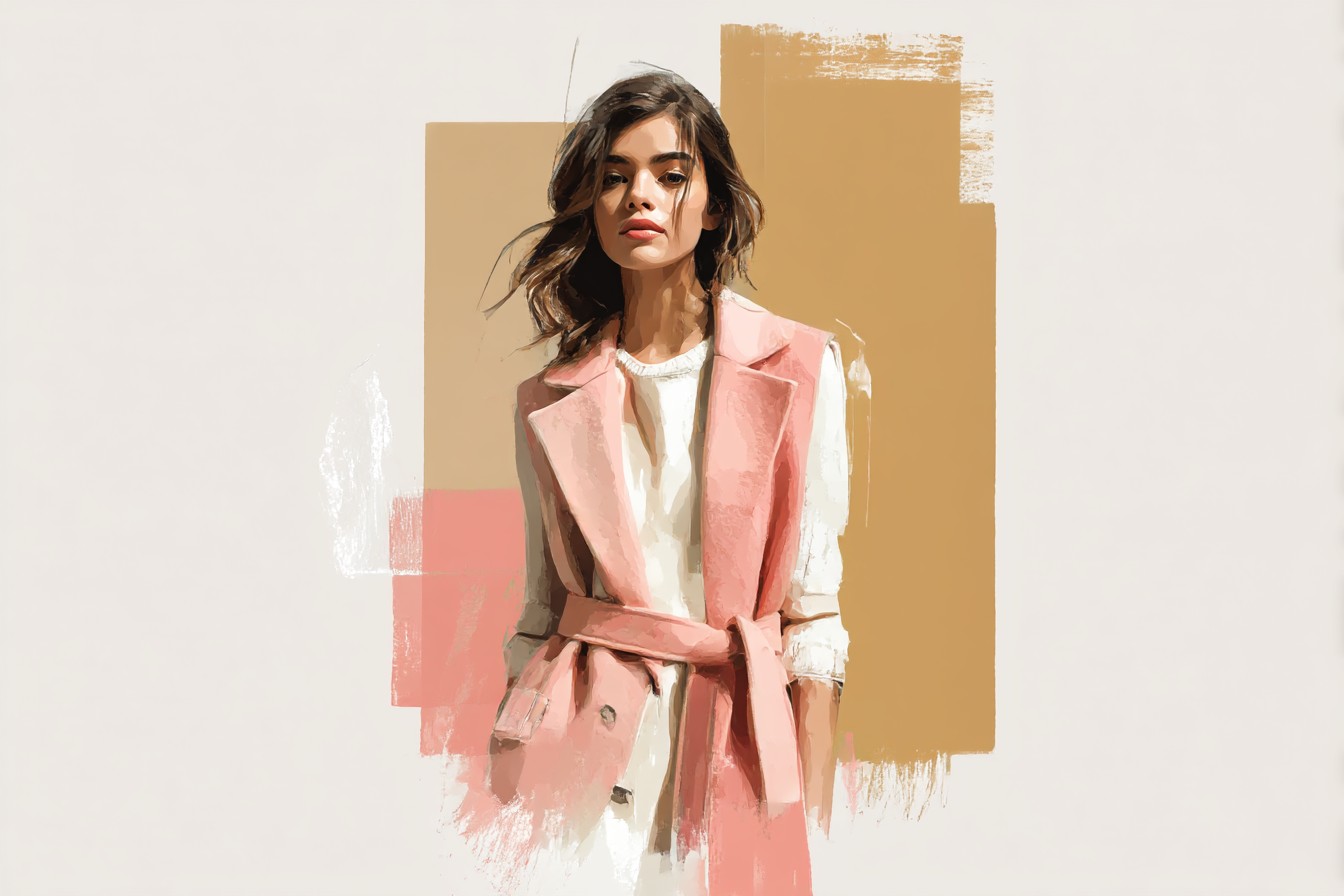
Pink is the detail that stops a gilet from reading as an afterthought, and that is precisely why it works harder than most outerwear in the middle-layer category. A good one earns its place on the strength of shade first: dusty rose and faded blush sit closer to neutral than people expect, while anything leaning towards bubblegum or fuchsia needs the rest of the outfit kept deliberately plain. The construction matters just as much as the colour. Look for a gilet with real body in the fill, whether that is down, a synthetic wadding, or a quilted cotton, because a flat, thin panel will crease against the body and lose its shape by lunchtime. Quilting pattern is a genuine indicator of quality here, diamond or box stitching that holds its line rather than puckering, and a collar with enough structure to stand up against wind rather than collapsing into a floppy ruff.
Fit is where most people get it wrong.
A gilet should sit with room enough to layer a jumper underneath without straining the armholes, but it should not be so generous that it reads as a bodywarmer from a different decade. Cropped versions that stop at the hip work best over fitted knitwear and tailored trousers, giving a cleaner line than a longer style, which tends to suit a slouchier, more relaxed silhouette worn open over a shirt.
Styling a pink gilet is really about tension. Pair it with something a bit tougher, a good pair of dark denim, utility trousers, or plain leather boots, so the colour has somewhere to land instead of tipping the whole look sweet.
Layered over a crisp white shirt it reads smart casual for daytime meetings or a countryside lunch. Thrown over a knit with jeans it becomes the obvious choice for the school run, dog walking, or anything that involves standing outside longer than planned. It also earns its keep at transitional moments, those weeks when a full coat is too much and a jumper alone is not enough, doing the quiet work of adding warmth without adding bulk. The best ones are the pieces reached for without much thought, precisely because the colour has already done the job of making an ordinary layer look considered.
Top Picks