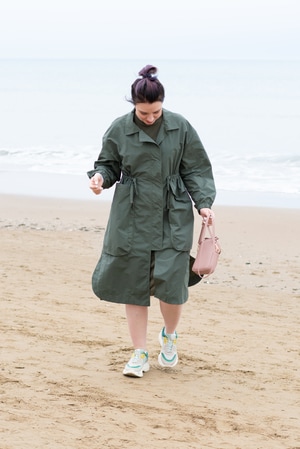
I will never forget that moment of utter embarrassment when I stepped out of the car on my first country weekend wearing my sparkling clean white AllBirds and looked around at everyone else’s mud-covered boots. The silence was almost deafening – except for the chuckle from Charlotte’s father who asked if I was “heading off to meet the Queen today.” I wanted to melt into the mud of the Cotswolds right there.
That was three years ago. Honestly? That was a serious wake-up call for how performative I was being about “dressing for the countryside”. I treated it like some sort of costume party. Buy all the “right” pieces. Show up looking like a Ralph Lauren advertisement. Done. Except the job wasn’t done. And I looked exactly what I was: a Seattle city girl who panicked shopped at REI the night before.
The thing is – I should’ve known better. I grew up in Boulder. I spent a lot of time outside. Somehow though, moving to the city made me forget the fundamental rule of outdoor clothing: function over fashion. Always. My mom would’ve probably laughed herself silly at my pristine country outfit. She raised me in second-hand hiking boots and hand-me-down fleeces that actually kept me warm — not Instagram-friendly pieces that looked great in photos but fell apart in real weather.
Here’s what I’ve learned since that embarrassing weekend – dressing for the countryside when you’re fundamentally a city person isn’t about buying a whole new wardrobe of “country” clothes. It’s about being honest about what you’ll be doing and dressing for it. What a revolutionary idea, I know.
Let’s begin with the obvious – that Barbour jacket. Yes, they’re classic. Yes, they last forever. Yes, they’re worth the money if you’re going to use them. For the love of God, if you buy one, please at least make it look like you didn’t just remove the tag in the car. New Barbours are the sartorial version of those people who buy vintage T-shirts from obscure bands they’ve never listened to – technically accurate, but completely missing the point.
I figured this out from my friend Emma, who grew up in rural Yorkshire and has the patience of a saint when it comes to my urban ineptitude. She took one look at my stiff, oily-smelling jacket and said, “Okay, let’s fix this.” We spent twenty minutes deliberately scuffing it up, sitting on it, even rubbing some dirt on the cuff. “You want it to look like you’ve had it since college,” she explained. “Not like you bought it to wear this weekend.”
The difference was staggering. Now my jacket looks…normal. Worn. Something I might actually wear, instead of a costume piece I pulled out for the weekend.
If a Barbour isn’t your thing – and I totally understand why they wouldn’t be, given the price – there are countless other options that work just as well. My go-to now is actually a Patagonia rain jacket I purchased for hiking and that’s performed admirably at country-house parties, music festivals, and Seattle drizzle-filled dog-walking excursions. It’s not “traditionally” country-looking, but it’s functional, and functionality trumps aesthetics every single time in the countryside.
Footwear is the area where city people totally blow it — myself included. Since the Great White Shoe Debacle of 2021, I’ve become absolutely consumed with finding the right countryside footwear. There are basically three types of footwear for the countryside: wellies for actual mud, hiking boots for real walking, and what I call “pub boots” – leather ankle boots that look normal but won’t disintegrate if you step in a puddle.
I purchased my current wellies at a farm supply store in Washington State for $35.00. They’ve lasted longer than any of my high-end pairs. They’re ugly, green rubber monstrosities that make my feet appear gigantic, but they’ve carried me through muddy fields, across rivers, and one particularly memorable incident involving an extremely enthusiastic golden retriever and a swamp. Function can truly be the only option.
When it comes to actual hiking — because yes, that “easy country stroll” will inevitably devolve into a forced march up terrain that is far more suitable to mountain goats — I invested in actual hiking boots. Not the fashionable ones that look great with jeans, but the technical hiking boots with significant treads and ankle support. I learned this the hard way after a “casual stroll” in the Lake District that became a three-hour trek over rocks and streams. My feet have never forgiven me for that particular shoe choice.
The mid-layer situation — everything between your jacket and boots — is also where I see many city people making the same mistakes I made. We get so caught up in creating our own “countryside aesthetic” that we completely ignore the issue of comfort and practicality. Those perfectly pressed riding pants you ordered online? They’ll be wrinkled and muddy within the hour. That delicate cashmere sweater that looks so quaintly rural? It’s not going to keep you warm in a drafty farmhouse where the heat is mostly suggestion.
I’ve found my happy place with straight-leg jeans I’m okay with getting dirty (and that’s key, jeans that you don’t mind messing up) Merino wool sweaters that actually keep you warm, and cotton long-sleeved shirts that you can either layer or remove based on the crazy fluctuations in temperature you’ll find in old houses and outdoor pursuits.
Layering took me an eternity to get. Country houses are strange, temperature-wise. The kitchen might feel like a jungle from the Aga, while the sitting room feels like a meat locker. You need to be able to adjust for the temperature swings without appearing to be doing a striptease or bundling up for the Arctic.
The only thing I really bring along to country weekends that can compete with the utility of my favorite sweater is a large wool scarf I bought at a thrift store in Capitol Hill five years ago. It’s worked as a blanket during outdoor picnics, a pillow during long road trips, an emergency dog towel, and once, memorably, a makeshift sling when someone rolled an ankle during a hike. It’s no longer particularly stylish — it’s been worn to death — but it’s infinitely practical.
Another problem city people have — especially myself — is bags. That cute little cross-body that carries your phone, keys, and lip gloss? Absolutely useless. You need space for water bottles, snacks, additional layers, first aid kits, and whatever random items you’ll be expected to lug. I now bring a proper hiking backpack and a canvas tote bag that may have seen better days but can withstand whatever it gets hit with.
Evening attire is perhaps the hardest part of dressing for a country house. How do you plan to dress for dinner at a country home when you have no idea if it’ll be “family dinner in the kitchen” or “real dinner in the dining room”? I’ve learned to play it safe and casual — nice jeans and a good sweater will get you most places, and if you’re overdressed, you can always shed a few layers or switch.
One of the worst mistakes I’ve ever made is arriving at a weekend in Northumberland wearing what I thought was the right attire for the evening — a wrap dress and heels — only to find out that everyone else was in fleece-lined slippers for a kitchen supper. Although no one said anything, I was embarrassed and uncomfortable the rest of the evening.
What I think I finally got was the idea that country-style should be invisible. When I’m dressed properly for a country weekend, I’m not even thinking about my clothes. I’m thinking about the conversation, the view, the temporary reprieve from urban stress. My clothes are just…there. Quietly working.
It’s taken me years to come to this realization. I still occasionally miscalculate. Last month, I showed up to a farm-stay in Oregon wearing what I believed to be acceptable boots — only to discover they had virtually no tread and made me a liability on slippery wet grass. However, the difference now is that these faux pas don’t ruin my whole weekend — I simply adapt.
Sustainability adds yet another dimension to the idea of dressing for the countryside. The greatest country clothes are the ones that last an eternity — that grow better with each passing year and wear. That pricey, ethical wool sweater I agonized over purchasing two years ago? It’s perfect for country weekends because it’s warm, sturdy, and looks better now than when I bought it. My secondhand hiking boots have molded perfectly to my feet and tell their story in a way that brand-new boots never could.
There’s something refreshing about dressing for mere functionality versus style — even if it took me a ridiculously long time to figure that out. The countryside doesn’t care about your exquisitely crafted aesthetic, or whether your outfit photographs well. It cares about whether you can walk five miles without whining, sit next to a campfire without fretting about sparks, and help carry firewood without fussing about your clothes.
If you’re approaching your first country weekend with the same dread I felt three years ago, here’s my advice: stop trying to look like you fit in, and focus on preparing for whatever activities are planned. Wear clothes you don’t mind getting dirty, wear boots that can handle mud, and wear layers you can modify to suit the weather. The objective isn’t to convince people you’re secretly a country person — it’s to have fun without your clothes getting in the way.