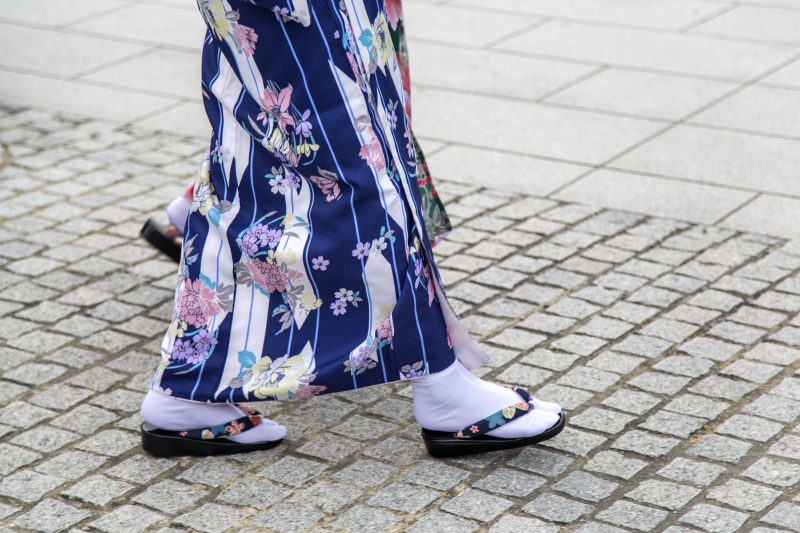
My brother looked at my feet during a family dinner and asked me, in a concerned voice, if I had injured my toe and needed a medical shoe. I told him I hadn’t injured my toe and that I had paid far too much money for shoes that were made to appear as though I had hooves. His response was a mix of the same kind of pity you show to people who’ve joined some sort of cult. And I get that. There’s something cult-like about the fashion world right now when it comes to shoes that are made to mock everyone else.
Although ugly-cute shoes aren’t entirely new, since the 2013 resurgence of Birkenstocks, we’ve flirted with intentionally unappealing footwear. I believe the trend we see today is more extreme, more provocative. We’re no longer just discussing shoes that are functional or a little ugly. We’re discussing shoes that reject conventional notions of what’s attractive – shoes with abnormal shapes, shoes with abnormal proportions, shoes with unique textures, and shoes that could make a podiatrist cry.
About three years ago, I noticed the trend at Paris Fashion Week. As I walked through the crowds outside of the shows, I noticed that the fashion crowd had quit wearing their uncomfortable high-heeled shoes and started wearing shoes that looked as though they came from a senior citizen hospital ward or a deep sea diving expedition. There were the large rubber-soled Bottega Veneta boots that added six inches to tall models. There were the Balenciaga platform Crocs that looked like small boats. And then there were my personal favorites – the increasingly popular split-toe Tabi boots and flats that make your feet look like cartoon hooves.
As an example of investigative journalism (I’m guilty of succumbing to fashion peer pressure like everyone else), I chose to jump into the ugly-cute shoe trend.
Over the past year, I have accumulated a collection of ugly-cute shoes that my roommate has referred to as “shoes that will scare small children.” My current shoe rotation includes the aforementioned Hoka shoes that turn my feet into colorful marshmallows, the aforementioned Margiela Tabis that prompt comments from strangers asking if I’d injured my foot, platform fisherman sandals that add four inches to my height and make me walk like a baby giraffe learning to stand, and – possibly the ugliest – fuzzy Birkenstocks that look like I’m wearing muppets on my feet.
The responses to my shoe experimentation have been both fascinating and entertaining. Those in the fashion world either get it instantly or pretend to understand it out of fear of appearing foolish for not understanding it. My editor Katherine looked approvingly at my cloven Tabis and said, “very you,” which I’m going to take to mean that she thinks I’m becoming increasingly eccentric, as opposed to increasingly odd. My friend Emma, a stylist with impeccable taste, borrowed my platform fisherman sandals for a date and sent me a text message at 11 pm stating, “He couldn’t stop looking at my feet. Not in a positive way. However, I do think it was worth it.”
Those outside of the fashion world have offered opinions. After seeing my fuzzy Birkenstocks, my mother asked me, “Who hurt you?” A barista at my local coffee shop has nicknamed me “Boot Goat” every time I wear my Tabis. Additionally, a child on the subway pointed at my chunky trail running shoes and loudly asked his mother why “that lady is wearing her daddy’s shoes.”
Regardless of the ridicule, the confusion, and the occasional concerns over my mental stability and well-being, I have never felt more connected to my shoe collection. There is something fundamentally liberating about wearing shoes that reject the conventional concepts of attractiveness. It is a rejection of the male gaze, of the discomfort for the sake of sex appeal, of the idea that women’s shoes need to be dainty, pleasing, or feminine. Ugly-cute shoes represent the fashion version of not smiling at a strange man telling you to — a small, yet satisfying act of defiance.
Additionally, the trend reflects a broader shift in our perception of style. For decades, fashion was largely about enhancement — clothes and accessories that enhanced you, making you appear taller, thinner, sexier, prettier according to conventional standards. However, the most innovative fashion is about disruption rather than enhancement — disrupting conventions, experimenting with proportion, creating tension and visual interest rather than conventional attractiveness.
It is essential to note that there is a logic behind the madness. The most successful ugly-cute shoes are not random or unintentionally ugly; they are deliberately and thoughtfully ugly in a way that creates a visually appealing contradiction with the rest of your outfit. This is the central point that many individuals struggle to understand — these shoes are meant to be viewed as part of an entire outfit.
For instance, when I wear my Tabis with a simple black dress, the stark contrast between the clean lines of the dress and the bizarre, hooved-like shape of the shoes creates a visual tension that is more interesting than if I had worn standard issue strappy heels. When I pair oversized chunky loafers with a tailored pair of pants and a crisp button-down shirt, the proportional play creates a classic outfit that appears new and slightly subversive.
However, to successfully incorporate the ugly-cute approach requires a level of intentionality that separates it from sheer ugliness. The shoes should be obviously intentional, and not appear as though they were the result of an accident or mistake. One of the easiest methods of distinguishing between someone who understands this trend and someone who is simply riding the wave is to evaluate the remaining portion of their wardrobe. If the remainder of their wardrobe is equally unconventional and oversized and “wrong,” it may look like they’re dressing up as a character. However, when unconventional shoes are paired with more refined clothing items, that is when the magic happens.
I learned this lesson the hard way after I wore my platform fisherman sandals to a professional event with an oversized suit and chunky jewelry, and three separate people asked if I was “dressed up as a specific person” for a themed party that didn’t exist. Too much disruption without sufficient contrast simply looks like disarray. Currently, I follow what I call the “one weird thing” rule — if the shoes are the anomaly, keep the majority of the remaining portion of your outfit normal.
Those interested in the trend, but hesitant due to the extreme nature of the trend, have a variety of less extreme options that are unlikely to incite inquiries as to their foot health. The Birkenstock Boston Clog is almost mainstream at this point, and it has the same slight orthopedic quality to it that defines the trend. Oversized chunky loafers with exaggerated proportions create the aesthetic without the clown shoe aspect. Some New Balance styles (the chunkier, the better) can dip into ugly-cute waters while still being socially acceptable in non-fashion settings.
My friend Tyler, a financial advisor who can’t afford to dress outrageously for work, has developed a subtle approach. “I wear traditional black dress shoes, but if you look closely, they have extremely thick rubber soles that are slightly too chunky to be considered fashionable,” he said. “No one at the office recognizes it, but other fashion enthusiasts recognise it immediately.” It is like having a secret handshake with those who understand.
One of the greatest advantages of the ugly-cute shoe trend is that it is relatively democratic. Like many other fashion trends, there are few requirements in terms of body type or budget. Many of the most iconic ugly-cute shoes are quite affordable. While Birkenstocks, Crocs, and Hokas are undoubtedly not cheap, they are substantially more affordable than the alternative offerings of designers. Additionally, as comfort often contributes to the designs (although this is not always the case – my beloved Tabis require a breaking-in period that I can only describe as “character-building”), they are certainly wearable for real life.
This said, embracing the ugly-cute shoe trend necessitates a certain degree of self-assurance and a willingness to laugh at oneself. You must be willing to endure questions, comments, and possible ridicule. You must be willing to be able to honestly say that you don’t care if others consider your shoes ugly – in fact, you must enjoy it. This is a trend for those who dress for themselves and other fashion enthusiasts, not for general approval.
The first time I wore my platform fisherman sandals to my parents’ home, my father stared at my feet for nearly a full minute before inquiring if I had experienced “some financial troubles” because my shoes seemed to resemble “something from a discount store in 1974.” I informed him that they were in fact very fashionable and produced by a reputable designer. He continued to express skepticism. “Well, if you say so, honey,” he said in a tone typically reserved for those who claim to have seen UFOs.
But later that week, I watched him study them with genuine interest when he assumed I wasn’t paying attention to him. “I still think they are strange,” he said when I called him out on this. “However, I think they are interesting-strange rather than purely ugly-strange.” And that is the crux of the ugly-cute shoe trend – interesting-strange rather than simply ugly-strange. It represents the difference between thoughtless ugliness and deliberate, conscious disruption.
The trend has caused the fashion community to reflect. At a recent dinner party, a designer friend posed an interesting question: “What if we are all simply dressing ourselves up as the Emperor’s New Clothes? What if these shoes are not subversive or interesting – what if they are simply, objectively ugly, and we’ve all collectively lost our minds?”
There was a brief moment of unease before another guest replied, “Perhaps. Nevertheless, I appreciate how they look.” And that is essentially all that matters. Fashion at its best has long existed in the grey area between beauty and ugliness, convention and challenge. The ugly-cute shoe trend simply makes this conflict more apparent, more accessible, and more whimsical.

