Look, I’ll be the first to admit this whole thing started as kind of a joke. My friend Sarah was over last month, and we were doing our usual Thursday night routine – wine, takeout, and way too much time scrolling through our phones. That’s when the algorithm decided to serve us both the same ad for this dress that’s apparently stalking every woman on the internet right now.
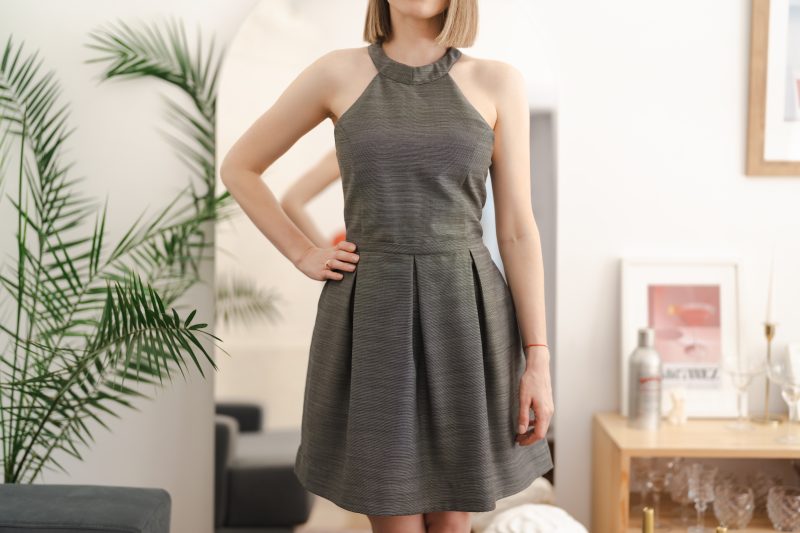
You know the one I’m talking about. That flowy midi thing with the tiered skirt and slightly puffy sleeves that comes in about forty different colors. The one that looks suspiciously like something you’d see at Anthropologie for $200, except it costs less than a decent dinner out.
“Oh my god, not this dress again,” Sarah groaned, swiping past it. “I swear three different people wore this exact thing to my book club last week. It’s like the new Lululemon leggings but for people who think they’re too fancy for athleisure.”
And that’s when my wine-influenced brain decided this was absolutely something I needed to investigate. For the blog, obviously. For science. Definitely not because I was slightly tipsy and curious about whether a $39.99 dress could possibly be as good as everyone seemed to think it was.
Twenty minutes and two more glasses later, I had ordered it in black and this rust-colored floral print that looked cute in the tiny product photo. I even paid for next-day shipping because apparently drunk me is very impatient when it comes to potential fashion disasters.
When the package showed up the next evening, I’d honestly forgotten I’d ordered it. I was expecting maybe that weird kitchen gadget I’d been eyeing (why did sober me think I needed a specialized avocado tool?), and instead pulled out way more fabric than I was anticipating for something that cost less than my last Starbucks binge.
My first thought wasn’t great. The material felt thin – not cheap exactly, but definitely not substantial. It was some kind of viscose blend that looked like it would wrinkle if you breathed on it wrong. The stitching was fine but nothing special. Basically exactly what you’d expect from a $40 dress, which is to say, not much.
I hung it in my bathroom while I took a shower, hoping the steam would help with the packaging wrinkles, and then promptly forgot about it again because that’s apparently how my brain works now.
The next morning I was running late as usual – my carefully planned outfit had fallen victim to a mysterious coffee stain that I definitely don’t remember making – and I grabbed the black dress in desperation. It was literally the only clean thing in my closet that wouldn’t require ten minutes of ironing, and I had a 9 AM meeting that I absolutely could not be late for.
I pulled it on fully expecting to look like I was wearing a garbage bag, turned to check the mirror, and… wait. What? It actually looked… good?
The fabric kind of skimmed over everything in this really flattering way. The sleeves hit at exactly the right spot on my arms – you know that sweet spot where they don’t make your shoulders look huge but also don’t cut off your circulation. The skirt had enough movement to feel feminine without making me look like I was about to milk a cow. I threw on a belt, some jewelry, and my favorite boots, and suddenly I wasn’t wearing a panic-grab Amazon dress – I was wearing an actual outfit.
Here’s where it gets weird. I made it to my meeting where Rebecca, our office’s resident fashion snob, actually complimented my dress. Rebecca, who exclusively shops at boutiques I can’t afford and once returned a perfectly nice sweater because the buttons were “philosophically inconsistent with the design aesthetic.” That Rebecca.
“Cute dress,” she said as I slid into the conference room. “Is that new?”
I had about three seconds to decide whether to lie or come clean. I could have said it was from some designer I’d discovered, preserved my fashion credibility, and moved on with my life. But something made me tell the truth.
“Thanks – it’s actually from Amazon. It was forty bucks.”
Instead of the judgment I was expecting, Rebecca leaned over to feel the fabric. “Huh,” she said. “It hangs really well. The proportions are actually pretty good.” Coming from someone who once spent fifteen minutes explaining why a certain neckline was “temporally inappropriate,” this was basically a five-star review.
I got six more compliments on that dress throughout the day. Six! Including from our social media coordinator who asked if she could feature it in her office style stories. By the time I got home, I was convinced I’d stumbled onto some kind of fashion cheat code.
That night I went down a rabbit hole reading reviews, and that’s when I discovered this isn’t just a popular dress – it’s a full-blown internet phenomenon with its own Instagram account. I’m not kidding. @the.amazon.dress has like 40,000 followers and it’s just hundreds of women wearing this exact same dress styled completely different ways.
Some people wore it with sneakers and jean jackets for weekend errands. Others had it styled with heels and statement jewelry for weddings. There were teachers wearing it with cardigans, new moms praising how nursing-friendly it was, someone who wore it to meet a celebrity. The comments section was like this weirdly supportive corner of the internet where women complimented each other’s styling and shared which colors they owned. Many admitted to having three or four versions, which suddenly made me feel less crazy about having already ordered two.
I decided to really test this thing out. I wore the black one to a work lunch, the floral to weekend brunch, and – in the name of thorough journalism – ordered three more colors. The navy, a green floral, and this burgundy that looked gorgeous online.
I also posted my own mirror selfie tagging the Instagram account, and within hours I had DMs from friends confessing they also secretly owned “the dress.” One of them, who works at a major fashion magazine, admitted to having it in five colors. “Don’t tell anyone,” she texted. “I have a reputation to maintain.”
The more I wore these dresses, the more I understood the hype. They hit this perfect sweet spot – put-together but comfortable, trendy but not too trendy, flattering on different body types based on all the photos I was seeing online. You could throw them in the washing machine. They didn’t wrinkle much if you rolled them instead of folding them. And honestly, they required zero brain power – just put one on, add accessories based on where you’re going, and you’re done.
But here’s the thing. I’ve spent years writing about why you should invest in quality pieces, why fast fashion is problematic, why you get what you pay for. So falling this hard for a $40 Amazon dress felt… conflicted? Was I being a hypocrite? Did this undermine everything I tell people about building a thoughtful wardrobe?
To make myself feel better, I did what any overthinking person would do – I made a spreadsheet. If I wore each dress once a week for six months, my cost per wear would be under two dollars. Even if they only lasted a year, that’s objectively good value. Plus, I was reaching for the same versatile pieces repeatedly instead of buying new outfits for every occasion, which is arguably more sustainable than constantly adding new stuff to my closet.
I also looked more closely at the construction, trying to figure out how something this affordable could actually be decent. The secret seemed to be simplicity. There weren’t a lot of complicated seams, no fancy details, no expensive hardware. They’d basically stripped away everything non-essential while keeping the key elements that made the silhouette work.
The real test came when I wore the black version to this fashion industry event last month. I dressed it up with statement earrings and my good heels, but I was still nervous about being in a room full of people wearing actual designer clothes while I was in my Amazon dress.
Instead of feeling like a fraud, I got compliments. Including from this stylist whose work I really admire. When she asked about the dress, I decided to just own it.
“Would you judge me if I told you it was forty dollars from Amazon?” I asked.
She laughed and looked around conspiratorially. “I’m wearing Amazon shoes right now,” she whispered, pointing to her strappy sandals. “The ones I wanted from another brand sold out, and these look almost identical.”
That conversation was weirdly liberating. It confirmed something I’ve always suspected but rarely talk about – even the most fashion-conscious people mix high and low, expensive investment pieces with strategic bargains. The perfectly curated designer wardrobe is mostly a myth perpetuated by social media. Real style has always been about knowing when to spend and when to save.
Don’t get me wrong – I still believe in investment pieces. My good bags, my well-made boots, the quality basics I’ve had for years – those are still the foundation of my wardrobe. But this Amazon dress situation has reminded me that good style doesn’t have to be exclusively expensive.
Sometimes the best fashion discoveries are the democratic ones – the pieces that become genuine phenomena because they’re accessible to most people. The wrap dress became iconic partly because it wasn’t precious. Converse sneakers have stayed cool for decades despite being relatively cheap. The best fashion items solve real problems for real people.
Six months after my wine-fueled impulse purchase, I own this dress in an embarrassing number of colors. I’ve worn different versions to work meetings, weekend trips, a wedding (the navy looked great with statement jewelry), and even to interview a designer who had no idea I was wearing a $40 dress while we discussed his $2,000 pieces.
The Instagram account now has over 50,000 followers. There are YouTube videos about how to style it different ways. It regularly sells out in the popular colors. What started as a viral product became something more interesting – proof of how fashion discovery has changed. This wasn’t pushed by major influencers or traditional marketing. It spread organically because regular women found something that actually worked for their lives and their budgets.
Last week I wore the black version (still my favorite) to meet Sarah for drinks. She immediately recognized it and shook her head.
“I’ve created a monster,” she said. “You know this is gateway drug behavior, right? Next thing I know you’ll be one of those people with an Amazon storefront.”
I laughed and adjusted the sleeves of my dress that had carried me through countless work days and events. “I draw the line at becoming an Amazon influencer,” I promised. “But I’m not gonna pretend I regret buying these.”
“So what’s the verdict?” she asked. “Is it actually good, or just good for the price?”
I thought about it for a second. “It’s actually good,” I said. “Not because it’s perfect or because it’ll last forever, but because it solves a real problem. A lot of women want to look put-together without spending a fortune or being uncomfortable. That’s what good design should do, regardless of what it costs.”
Sarah nodded thoughtfully, then grinned. “So you’re saying I should finally order one?”
“Absolutely,” I replied, already pulling up the listing on my phone. “But fair warning – you’ll probably end up with three.”
And sitting there, two supposedly fashion-savvy women huddled over an Amazon product page, I couldn’t help thinking about how the lines between “high” and “low” fashion keep getting blurrier. When luxury brands make $300 t-shirts and Amazon makes surprisingly decent dresses, maybe the old rules about where good style comes from are finally breaking down.
Honestly? That might be the best trend of all.

Claire started Claire Wears to bridge the gap between fashion media and real life. Based in Chicago, she writes with honesty, humor, and a firm “no” to $300 “affordable” shoes. Expect practical advice, strong opinions, and the occasional rant about ridiculous trends.