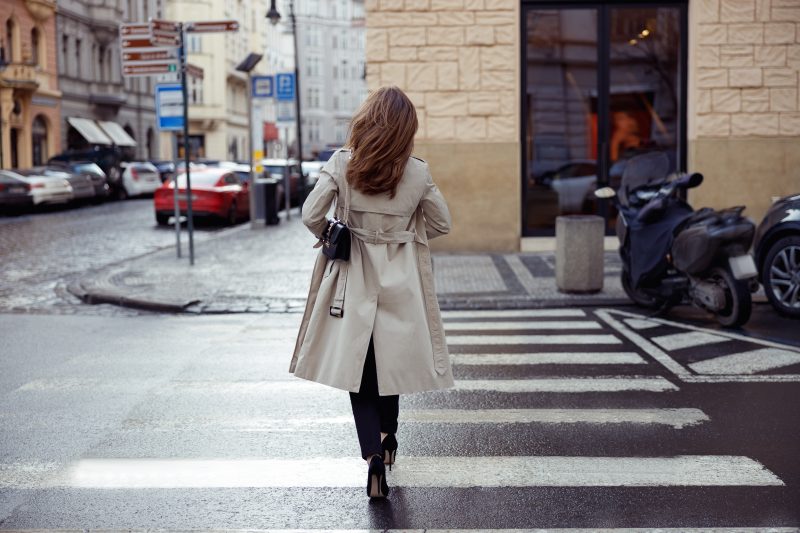
The woman across from me at the coffee shop looked like money. Not the flashy, new-to-wealth kind with obvious logos plastered across her chest, but the kind that’s been comfortable for generations and doesn’t need to announce itself. Her cashmere coat hung just so—slightly oversized but perfectly tailored. The fabric caught the light in that particular way that screams “I cost more than your rent” without actually saying a word. Her leather bag sat beside her, devoid of hardware or monograms, just buttery leather in the perfect shade of caramel that somehow made every other brown bag look cheap.
“That’ll be $7.50,” said the barista, handing me my oat milk latte in a paper cup that immediately started burning my fingers. I juggled it awkwardly while fishing through my wallet, dropping three loyalty cards and a crumpled receipt on the floor. Meanwhile, Cashmere Coat Woman glided past, her own drink in hand, looking like she’d never experienced a clumsy moment in her life.
I’m not ashamed to admit I followed her with my eyes, mentally cataloging her outfit. The sweater underneath the coat was the color of uncooked oatmeal—not the instant packets I buy on sale at Duane Reade, but the fancy kind sold in rustic glass jars at specialty stores.
Her pants were a slightly lighter shade I’d call “raw almond,” and her loafers were what my grandmother would call “good leather.” The entire palette existed in that narrow band between beige, cream, and the palest of browns. Yet somehow, she didn’t look boring—she looked expensive as hell.
This, my friends, is what the internet has dubbed “quiet luxury,” though the concept has existed since long before TikTok decided to name it. It’s the antithesis of logo mania, the rejection of trends in favor of timeless investment pieces, the whisper instead of the shout. It’s Succession core, old money aesthetic, stealth wealth—call it what you want, but it’s everywhere right now.
I spent three days after my coffee shop encounter in a rabbit hole of research, because that’s the kind of fashion nerd I am. The wealthy have always had their codes—signals recognizable to those in the know while remaining invisible to everyone else. It dates back centuries, with subtle markers like the quality of one’s gloves or the fabric of one’s waistcoat separating true aristocracy from the aspiring middle classes. Today’s version just happens to involve a lot of beige and clothes that look simple until you check the price tag.
The poster children for this aesthetic aren’t hard to find: The Row (designed by Mary-Kate and Ashley Olsen, who, not coincidentally, grew up wealthy); Khaite; Loro Piana; Brunello Cucinelli—brands where a plain white t-shirt can cost upwards of $300 and a sweater might set you back the equivalent of a used car. The pieces aren’t meant to be statement-making in the traditional sense. There’s no bedazzling, no neon colors, no silhouettes that would make strangers stop you on the street to ask where you got that. Instead, they whisper their value through impeccable tailoring, sumptuous materials, and a certain ineffable rightness in how they hang on the body.

I called up Simone, my old boss from the fashion closet days who now works as a stylist for clients who’d rather die than disclose their net worth. “It’s always been around,” she told me, her voice slightly distorted through her AirPods as she power-walked between appointments. “But it’s having a moment because everyone’s so sick of looking like a walking billboard. That, and the economy is weird right now. Flaunting obvious wealth feels tone-deaf when half your friends are worried about making rent.”
The irony, of course, is that projecting this kind of understated elegance often requires more money than plastering yourself with logos. Anyone with a few hundred dollars can buy a GG-covered Gucci belt. But that perfect-weight, perfectly draped cashmere coat that looks like nothing special to the untrained eye? That’ll cost you thousands. The economics of inconspicuous consumption are fascinating and slightly infuriating.
My friend Emma texted me last week: “Just spent my entire tax return on a beige sweater that looks exactly like every other beige sweater I own, but this one is cashmere and makes me feel like I should be drinking expensive wine in the Hamptons instead of boxed wine in my apartment with the weird mold spot. Help.”
I get it. I really do. There’s something seductive about the quiet luxury aesthetic. It promises that elusive quality of effortlessness—looking put-together without looking like you tried. It suggests you have more important things to think about than chasing trends. It implies permanence in a world of fast fashion disposability.
But here’s the thing—you don’t actually need a trust fund to capture elements of this vibe. I’ve spent years studying how wealthy people dress, both for work and because I’m admittedly a little bit obsessed, and I’ve cracked some of the codes. So let me break down how to achieve the look without selling vital organs.
First, it’s all about the fit. I cannot stress this enough. The quickest way to look expensive is to have clothes that actually fit your body perfectly. Find yourself a good tailor—not the dry cleaning place that also does alterations, but someone who actually knows what they’re doing. I found mine, Mr. Chen, through a friend of a friend, and I’m pretty sure he’s worked on actual Savile Row suits. He charges me next to nothing to nip in waistbands and adjust hemlines, and those small tweaks make $40 pants look like they cost $400.
Second, focus on fabrication. This is trickier on a budget, but not impossible. Learn to recognize good materials by touch—spend an afternoon in expensive stores just feeling everything (I’ve definitely been followed by suspicious security guards while doing this research). Train your eye and your fingertips to know the difference between thin, pilling cashmere and the good stuff. Then hunt for those materials at secondhand stores, estate sales, and during serious end-of-season sales.
My best quiet luxury find was a 100% camel hair coat I found at a thrift store in Connecticut for $60. The brand label had been cut out (which actually made it look more expensive somehow), but based on the construction, it was probably $1,500+ new. It’s the color of café au lait and weighs exactly the right amount—substantial enough to feel luxurious but not so heavy it’s cumbersome. Every time I wear it, fashion people ask if it’s Max Mara.
Third—and this might hurt—build your wardrobe slowly. The antithesis of quiet luxury is showing up one day in an entirely new expensive-looking wardrobe. That screams “I just came into money and I’m trying too hard.” Instead, acquire pieces gradually. Save up for one really good item rather than five mediocre ones. My strategy is to put aside a little every month specifically for what I call “forever pieces”—items I’ll still be wearing a decade from now.
Fourth, pay attention to the details that signal quality. Wealthy people notice things like natural vs. plastic buttons, the way a garment is lined, the quality of stitching, and how a fabric moves. You should too. Learn to spot corner-cutting in construction, and avoid pieces that take shortcuts, even if the overall look is right.
Fifth—and this is the part no one talks about—master the quiet luxury attitude. There’s a certain nonchalance to how the wealthy wear their clothes. Nothing looks too precious or too new. Nothing looks uncomfortable. You never seem like you’re showing off or seeking compliments. Your outfit isn’t the most interesting thing about you—it’s just the perfectly appropriate packaging for whatever fascinating thing you’re actually doing.

This last part might be the most important and, conveniently, costs absolutely nothing. I’ve seen women in head-to-toe Zara who radiate this energy, and women in head-to-toe The Row who don’t. It’s about confidence and a certain studied casualness that suggests you belong anywhere you happen to be.
I tried the aesthetic myself for a week, limiting myself to a palette of oatmeal, biscuit, camel, and the palest gray. I pulled my most expensive-looking pieces from the back of my closet, had two items tailored to fit better, and thrifted a silk shirt the color of Earl Grey tea with a splash of milk. I wore minimal jewelry—just my grandmother’s thin gold chain and small pearl studs. I traded my usual bright lipstick for a your-lips-but-better shade.
The reaction was interesting. Two fashion industry friends immediately asked if I’d gotten a raise. My doorman called me “ma’am” instead of “miss” for the first time ever. A salesperson at Bergdorf’s actually made eye contact with me. But the biggest difference was in how I felt—slightly more pulled together, slightly more adult, slightly more like someone who has her shit figured out (reader, I do not).
The quiet luxury aesthetic isn’t for everyone, nor should it be. Fashion should be fun and expressive, not a uniform. Some days I want to dress like a walking billboard for maximalism. But there’s something to be said for understanding the visual language of wealth, even if you choose not to speak it regularly. It’s another dialect in your fashion vocabulary, useful for certain conversations.
So the next time you spot someone in seemingly simple clothes who somehow radiates money, look closer. Study the drape of the fabric, the precision of the cut, the subtle harmony of neutral tones.
They’re speaking a language that’s been around for centuries, one that says “I don’t need to prove anything to anyone.” And whether your budget runs to The Row or the clearance rack at Uniqlo, there are ways to borrow their accent, even if you’re not quite fluent.
Now if you’ll excuse me, I need to go return that oatmeal-colored sweater I panic-bought after my coffee shop encounter. Turns out even fashion editors aren’t immune to aspiration-driven impulse purchases. Next time I’ll follow my own advice and save up for the good cashmere instead.