As someone who has spent her entire adult life working in fashion, you’d think I’d have a rock-solid sense of personal style by now. A clearly defined aesthetic that guides my purchasing decisions and helps me get dressed every morning without the existential crisis that comes from staring into a closet full of clothes while feeling like I have absolutely nothing to wear. You’d think that, and you’d be completely wrong.
The truth is, fashion editors are often the worst dressers in private. We’re so saturated with trends, so constantly exposed to new collections and innovative styling, that our own closets become chaotic testing grounds for whatever has most recently caught our professional attention. One day it’s all oversized menswear because we just covered a Balenciaga show. The next week we’re suddenly wearing ballet flats with everything because we interviewed someone from Miu Miu. It’s fashion attention deficit disorder, and I’ve been suffering from an acute case for approximately fifteen years.
The result is a wardrobe that makes no coherent sense—racks of clothing that look like they belong to several completely different people with wildly divergent lives. Business casual silk blouses hung next to vintage band t-shirts. Tailored wool trousers sharing space with distressed denim that appears to have been attacked by particularly fashion-forward wolves.
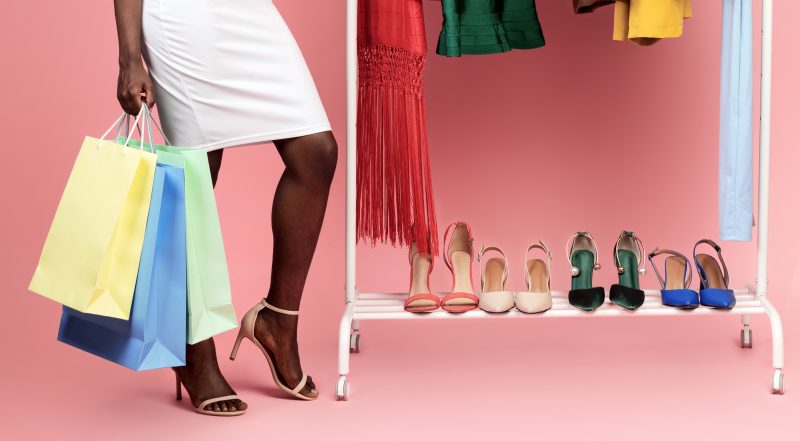
Sensible heels lined up beside chunky platforms that add five inches to my height and subtract any possibility of comfortable walking.
This fragmented approach to dressing reached a crisis point last month when I found myself sitting on my bedroom floor at 7:30 AM, surrounded by discarded outfits, on the verge of tears because nothing felt right. Not trendy enough, not classic enough, not professional enough, not creative enough. Not me enough. But who exactly was this “me” I was failing to dress? I realized I couldn’t articulate it, even to myself.
That same evening, doom-scrolling through TikTok instead of cleaning up the clothing explosion in my bedroom (healthy coping mechanisms are my specialty), I came across a video from a stylist explaining something called the “Three-Word Method.” The premise was simple: define your personal style in just three words, then use those words as a filter for every single thing in your closet and every future purchase you consider.

“It’s not about limiting yourself,” she explained as she moved items from a client’s closet into “keep” and “donate” piles with alarming efficiency. “It’s about creating a North Star for your style decisions. If something doesn’t align with at least two of your three words, it probably doesn’t belong in your closet.”
I rolled my eyes so hard I nearly strained an ocular muscle. As if personal style could be distilled down to three words! As if my complex relationship with fashion—built over decades of trend cycles, career evolution, body changes, and shifting identity—could be reduced to a TikTok formula! Utterly ridiculous. Completely oversimplified. Exactly the kind of pseudo-fashion advice that drives professionals like me insane.
I bookmarked the video immediately.
The next morning, still thinking about those three stupid words, I pulled out my journal and decided to humor the concept. If I were to define my ideal personal style—not what’s currently hanging in my closet, but how I want to look and feel in my clothes—what three words would capture it?
The first word came easily: Tailored. Not necessarily in the sense of custom clothing (though a girl can dream), but in the sense of deliberate structure. Even when I wear oversized pieces, I prefer when they look intentional rather than accidental. When I look back at outfits I’ve loved, they all have a certain precision to them—a crispness, even when they’re relaxed.
The second word took longer. I tried on “minimal” but it didn’t feel right—some of my favorite pieces are distinctly not minimal. “Classic” was too boring and didn’t account for my love of unexpected elements. After cycling through about fifteen options, I landed on: Architectural. It captured my attraction to interesting proportions, clean lines, and garments with a certain structural integrity. Clothes that look designed rather than just manufactured.
The third word was the hardest. I wanted something that would allow for playfulness while still feeling sophisticated. “Eclectic” was too scattered. “Creative” too vague. “Artistic” too pretentious. Finally, after staring at my ceiling for longer than I care to admit, it hit me: Subversive. The pieces I’m most drawn to, the outfits I feel most myself in, always have an element of subtle subversion—something slightly unexpected or off-kilter that keeps the overall look from being too straightforward.
Tailored, Architectural, Subversive. T.A.S. Not the most melodious acronym, but I felt a strange rush of clarity seeing those three words together. They seemed to capture something essential about what I’m always reaching for but frequently missing in my daily getting-dressed struggle.
The real test, of course, would be applying this filter to my actual wardrobe. The next Saturday, I cleared my schedule, put on what my friend Emma calls my “fashion battle playlist” (heavy on Róisín Murphy and LCD Soundsystem), and prepared to confront my closet with my new three-word mantra as my only weapon.
Starting with tops, I pulled out each piece and asked myself: Does this align with at least two of my three words? My crisp white button-down? Tailored and architectural—easy keep. The shapeless boho blouse I bought during a brief Sienna Miller-circa-2005 nostalgia phase? Not tailored, not architectural, not subversive. Straight to the donation pile, no emotional negotiation allowed.
This ruthless efficiency continued through every category. My beloved black wool trousers with the slightly asymmetrical waistband? Tailored, architectural, AND subversive—triple word score! The trendy puff-sleeve dress that never quite felt right but I kept because it was expensive? None of my three words applied. Into the resale bag it went.
The process was surprisingly emotional. Each piece I evaluated forced me to confront why I’d bought it in the first place. Some items had been aspirational purchases—clothing for a life or persona I didn’t actually have. Others were trend-driven acquisitions that had never truly integrated into my personal style. Many were “almost right” pieces that I’d settled for in the moment but had never fully satisfied what I was looking for.
Four hours and an embarrassing amount of discarded clothing later, I was left with approximately 60% of my original wardrobe. What remained was still diverse in terms of color, silhouette, and even degree of formality—but now there was a coherent thread connecting everything. Each piece felt intentional. Each one aligned with my three-word filter in some way. More importantly, each one actually felt like me.
The next test was getting dressed with my newly edited wardrobe. Monday morning arrived, and instead of my usual frantic try-on session, I approached my closet with my three words firmly in mind. Tailored, Architectural, Subversive. I pulled out high-waisted black trousers (tailored), paired them with a crisp white shirt with exaggerated cuffs (architectural), and added a vintage men’s vest I’d had tailored to fit me perfectly (subversive in its masculinity, tailored in its fit). Simple gold jewelry, black ankle boots, done.
The entire process took less than ten minutes, and when I looked in the mirror, I felt something I hadn’t experienced in years: a sense of recognition. The woman looking back at me was someone I knew, wearing clothes that expressed something authentic about her rather than just responding to the latest trend or professional expectation.
When I arrived at the office, our social media manager Zoe immediately noticed. “You look so good today,” she said, with the slightly surprised tone of someone who didn’t realize they were implying that you usually don’t look good. “Like, really put-together but still cool.”
Tailored but subversive. She was speaking my language without even knowing it.
The compliments continued throughout the day, but more importantly, I felt a new ease in my appearance. No tugging at hemlines or second-guessing my choices. No feeling like I was wearing someone else’s clothes. Just the quiet confidence that comes from wearing something that genuinely reflects who you are.
Encouraged by this initial success, I decided to take the experiment further. The following weekend, I went shopping with my three-word filter as my guide. At each store, before even taking something to the fitting room, I asked: Does this align with at least two of my three words? If not, I didn’t even bother trying it on, no matter how trendy or appealing it might have seemed on the rack.
This approach was revolutionary for someone like me who has historically been seduced by everything from prairie dresses to neon cycling shorts, depending on the current trend cycle. In a single afternoon, I tried on fewer items than I normally would but ended up with three pieces that integrated seamlessly into my existing wardrobe—a structured denim jacket with architectural shoulders, a pair of tailored shorts with asymmetrical buttons, and a crisp poplin shirt with unexpected cut-outs at the cuffs.
Each new addition strengthened rather than diluted my core style. Each one could be mixed and matched with multiple existing pieces in my newly-curated closet. Most importantly, each one genuinely felt like an expression of my personal aesthetic rather than a response to external fashion pressure.
The real validation came about three weeks into my three-word experiment, when Katherine, my notoriously hard-to-impress editor-in-chief, stopped by my desk. “You’ve been dressing differently lately,” she observed, with that clinical precision that makes junior editors quake in their boots. “More consistent. It suits you.”
Coming from Katherine, this was basically the fashion equivalent of receiving a MacArthur Genius Grant. I smiled and thanked her, resisting the urge to launch into an explanation of my TikTok-inspired epiphany. Some style secrets are best kept to oneself, especially when they involve admitting that you’ve been taking fashion advice from social media algorithms.
Six weeks into living by my three-word filter, the benefits have extended far beyond just getting dressed more easily in the morning (though that alone would have been worth it). My shopping habits have changed dramatically—I’m buying less but better, with a clearer idea of what truly deserves space in my wardrobe. My morning routine has been streamlined by at least 20 minutes, giving me time for an actual sit-down breakfast instead of inhaling a granola bar on the subway.
But the most significant change has been in how I feel in my clothes. There’s a psychological ease that comes from wearing things that genuinely reflect your personal aesthetic rather than whatever trend currently has its claws in the zeitgeist. I feel more myself, more consistently, than I have in years.
This isn’t to say I’ve abandoned trend awareness entirely—I still work in fashion, after all. But now trends enter my wardrobe only if they align with my three-word filter. That oversized blazer with strong shoulders? Architectural and potentially subversive in the right context—I’ll consider it. Those prairie dresses that keep cycling back into style? Not tailored, not architectural, not subversive—not for me, no matter how many cool girls on Instagram are wearing them.
The TikTok stylist was right about one key point: these three words aren’t limitations but clarifications. They don’t tell me exactly what to wear; they help me recognize what resonates with my personal style and what doesn’t. They’re guardrails that keep me from veering into wardrobe choices that might be objectively fashionable but subjectively wrong for me.
Of course, the specific three words will be different for everyone. My friend Emma’s words are “Eclectic, Romantic, Bold”—a combination that perfectly captures her vintage-heavy, pattern-mixing approach to dressing. My colleague Tyler opted for “Minimal, Textural, Japanese-influenced,” which guides his monochromatic, sculptural wardrobe choices. There’s no universal combination that works for everyone, which is precisely the point. The process forces you to identify what actually matters to you, not what should matter according to current trends or fashion authorities.
I’ve started recommending the three-word method to everyone who asks me for style advice, from friends stuck in wardrobe ruts to readers who email asking how to develop a more cohesive personal style. The feedback has been overwhelmingly positive, with many reporting the same sense of clarity and confidence I’ve experienced.
There’s something powerful about putting words to your aesthetic instincts—about making implicit preferences explicit. It’s not that I didn’t know what I liked before this experiment; it’s that I couldn’t articulate it clearly enough to use it as a consistent filter. Having those three words has transformed vague inclinations into actionable criteria.
As for my formerly overstuffed closet? It’s now a more curated collection where everything works together because everything shares at least some common aesthetic DNA. Getting dressed feels less like a daily identity crisis and more like choosing which version of myself I want to present to the world today—all of them authentic, all of them aligned with my core style values.
I still occasionally find myself tempted by pieces that don’t fit my three-word filter. Just last week, I tried on a billowy bohemian dress that was exactly the opposite of tailored, architectural, or subversive. It was objectively beautiful and on serious sale. For a moment, the old pattern asserted itself—the voice saying “but it’s a good deal” and “maybe this is your new look for summer.”
Then I took a photo of myself wearing it and sent it to Emma with the caption: “Does this look like me?” Her response came almost immediately: “It’s giving ‘woman who makes her own kombucha and has strong opinions about crystals.’ Beautiful dress, not Harper dress.”
She was right. I put it back on the rack and walked out empty-handed—something that would have been unthinkable in my previous shopping life. Later that day, I found a structured linen blazer with subtle origami-inspired details at the collar. Tailored, architectural, with just a hint of the subversive in its angular design. That came home with me instead.
This isn’t to say that personal style should be rigid or unchanging. My three words might evolve over time as I do, and that’s perfectly fine. The point isn’t to lock myself into a permanent aesthetic box but to have clarity about my current style intentions—to make choices from a place of self-awareness rather than momentary impulse or trend pressure.
For now, though, Tailored, Architectural, Subversive feels like home. It feels like the style equivalent of a deep breath and a moment of recognition: oh, there you are. I’ve been looking for you.
So if you find yourself drowning in options but still feeling like you have nothing to wear—if your closet is full but your confidence is empty—I can’t recommend this TikTok wisdom highly enough. Find your three words. Let them guide you. Watch how quickly your relationship with your wardrobe transforms from chaotic to intentional, from scattered to focused, from vaguely unsatisfying to deeply aligned with who you actually are.
Just don’t blame me when you end up getting rid of half your clothes and temporarily traumatizing your local donation center with an unexpected avalanche of castoffs. Consider it fashion collateral damage in the pursuit of authentic personal style—three words at a time.