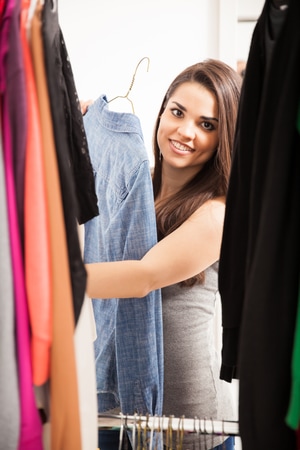
Look, I have to be truthful with you about something that’s been bugging me for months. A woman who spends her days digging through quarterly reports, and her nights checking the internet to find out if Theory blazers are worth the $400 price tag (they probably aren’t), never imagined that she would be the one blogging about Amazon fashion finds. Honestly, some of you may dislike what I found.
It started by curiosity. You know how TikTok will show you videos of women unpacking $20 blazers, and the video says that the blazers are almost indistinguishable from a high-end designer piece? I was watching these videos and thinking, there is no possible way these blazers are any good. I’ve owned so many expensive clothing items that I’ve done my homework before purchasing each item. My closet is full of investment pieces that I did my homework before purchasing. The idea that you could purchase something that’s truly good for less than thirty dollars, seems to be a slap in the face to every single piece I’ve spent money on in my closet.
But the algorithm kept sending me these videos and eventually my curiosity took over. I told myself I was doing research – like what if there were some hidden gems in Amazon’s fashion section that could be a viable option for professional women on a tight budget compared to mine? What if I am just being a snob about the prices? One evening after a long day of faking caring about market volatility, I opened the app and began putting things in my cart.
Over the course of seven days, seven packages arrived at my apartment. I’m pretty sure my building doorman judged me – I could tell by looking at him that he was judging me as I lugged all those Amazon boxes up the stairs. Whatever, I was invested in this experiment now.
The first thing I tested was the sweater blazer that everyone has been talking about. Thirty-nine dollars for something that looks similar to those expensive knit blazers that you find at Nordstrom. I thought it would either be horrible or a little bit of a nice surprise – there’s rarely a middle ground when it comes to this type of clothing. The moment I removed it from the box, my first reaction was… wait, this does not feel like trash. The fabric is substantial, and it does not have that cheap polyester feel that you typically get with low-cost clothing.
I wore it to a client meeting last week with a pair of straight leg jeans and a white T-shirt. This is essentially my go-to combination when I want to look somewhat polished without having to try too hard. No one said a word about the blazer, and in a professional setting that’s a good thing. That means it didn’t scream “cheap” or “wrong”. The cut of the blazer fits well with my body, the shoulders fit well and it doesn’t wrinkle to death after sitting in it for 8 hours. For under $40, I think that’s amazing.
The slip skirt was another pleasant surprise. I have avoided silk slip skirts for years because either they are expensive and require maintenance, or inexpensive and clingy. This skirt claims to be “silky”, which in my experience generally means that it’s a synthetic nightmare. However, it actually slips and hugs rather than clinging. The elastic waist band doesn’t create that hideous bulge that occurs when poorly constructed skirts are worn. I have worn this skirt twice now – once to meet with friends for cocktails and once to the office with the Amazon blazer. In both cases, it functioned far beyond expectations.
While the skirt does produce an alarming amount of static electricity, and it is clearly not real silk. From a distance of greater than three feet, however, it appears to be. And sometimes that’s enough. Not every piece in your wardrobe has to be a family heirloom.
We’ll discuss the failures, since there were a few, and you should know about them.
The “genuine leather” cross body bag was completely fake. I have no idea what material it actually is, but it smells like a toxic waste dump and left one of my shirts a faint shade of green where the strap rested. The hardware started tarnishing right away – like, after one use. It went back into the return pile immediately.
Those wide-leg “linen blend” pants were an abomination. The girl in the picture of the listing looked effortless cool. I looked like I was wearing a sack of burlap. The fabric was scratchy, made a racket when I walked, and had roughly 0% of the actual linen that the description claimed. They are currently being used as a drop cloth for my friend’s art projects, which I think is their highest and best use.
And then there were the sunglasses. Comedy-level bad. Cheap plastic that sat crookedly on my face and provided questionable UV protection. After I accidentally left them in a hot car, they warped into an abstract sculpture. Even my usually non-judgmental bodega guy raised an eyebrow when I wore them to grab coffee.
However, the basic T-shirts I bought as a throwaway to make me eligible for free shipping? Those are actually good. Like, better than some shirts I’ve purchased for five times the cost. The cotton is substantial, they wash without shrinking or losing shape, and the cut is somehow flattering on all bodies. I immediately ordered four more colours because when you find basics this good at this price point, you buy a bunch.
I wore an outfit consisting of all Amazon-made items to a fashion industry event last week – the blazer, skirt, one of those T-shirts, and some unexpectedly good gold hoop earrings. No one asked about the clothing, which in fashion circles is a sign that nothing about the clothing screamed “cheap” or “bad”. When I mentioned to a coworker who is normally quite brand-conscious that I had gotten all the clothing from Amazon, she looked genuinely puzzled about why I would choose Amazon over getting samples from designers or using industry discounts.
That’s a fair question, and I’ve been thinking about it a lot. One part of it is just curiosity about how closely mass produced clothing can resemble high end pieces. Another part of it is convenience – I can buy things from my couch at midnight, rather than fighting crowds at sample sales. But honestly, part of it is about accessibility. Not everybody has the budget I do for clothing, or the ability to get industry discounts, or even access to a good place to shop.
Honestly, some Amazon fashion is actually pretty good, some is horrifically bad, and most falls somewhere in the middle. The problem is determining which category a particular piece of clothing will fall into before you buy it, since the pictures and descriptions on Amazon often do not accurately reflect the quality of the garment.
My current approach is to buy simple, classic styles, and avoid trendy pieces. Avoid anything claiming to be leather or silk unless you are willing to be let down. Cheque the return policy before you buy something, because you will definitely be returning some things. And, perhaps, do not do your shopping at 2AM when you are feeling impulsive – that is how you end up with 17 packages delivered to your doorstep.
More Amazon orders are coming this week because I seem to be fully immersed in this research project. My doorman has stopped commenting about the number of packages, which I am interpreting as a sign of professional acceptance rather than resignation. I am also really interested to see what other things I can find that challenge my assumptions about price vs. quality in fashion.
In short, Amazon fashion is not going to replace your entire wardrobe, but there are some good finds if you know what to look for. Just don’t expect miracles, and be sure to budget for returns. Some of the TikTok videos are true, but a whole lot of them aren’t, and finding the difference between the two is half the battle.