It started, as most of my questionable fashion decisions do, with a late-night conversation with my best friend Emma. We were sprawled across my living room floor, surrounded by takeout containers and half-empty wine glasses, watching a “Succession” episode when she suddenly paused the TV.
“You know who you could totally pull off? Shiv Roy,” she said, gesturing toward Siobhan’s impeccably tailored cream pantsuit. “You’ve got that whole power-intimidation thing going already.”
I nearly choked on my pad thai. “I do not have an intimidation thing,” I protested, which made Emma laugh so hard she actually snorted wine through her nose. Not her finest moment.
“Harper,” she said, dabbing her face with a napkin, “you made an intern cry last week.”
“He sent unretouched photos to a designer! They were supposed to be edited first!” I countered, though the memory still made me cringe. Poor kid looked like I’d told him his dog died. But still, professional standards exist for a reason.
Anyway, this got us thinking about how much a person’s wardrobe shapes how others perceive them. As someone who writes about fashion for a living, I’m hyperaware of clothing as communication—every hemline and color choice saying something before your mouth opens. But what would happen if I completely abandoned my own aesthetic and fully committed to embodying fictional characters through their signature styles?
The idea was ridiculous enough to be interesting. I was between major fashion weeks, my editor had been bugging me to come up with something “more approachable” for our readers, and honestly, I needed a palate cleanser after three straight months of writing about sustainable knitwear innovations (fascinating but, my god, how many ways can you describe responsibly-sourced wool?).

“One week. Seven characters. Total commitment,” I declared, pointing my chopsticks at Emma with what I hoped was dramatic flair but probably just looked like I was conducting an invisible orchestra with Asian fusion cuisine.
“You won’t last three days,” Emma challenged, reaching for her phone. “I’m documenting this entire disaster for posterity.”
Challenge accepted.
Day one: Wednesday Addams. Why start subtle when you can dive straight into the deep end, right? I have the advantage of naturally dark hair, though mine is usually styled in what my stylist charitably calls “intentionally messy waves” rather than Wednesday’s severe center-parted braids. The braids took me three attempts and a YouTube tutorial designed for dads doing their daughters’ hair, which was humbling to say the least.
The outfit itself was straightforward—black collared dress with a white collar, black tights, chunky black shoes. I own versions of all these things already because, hello, I work in fashion in New York. But Wednesday’s look isn’t just about the clothes—it’s the unwavering commitment to emotional flatness, which presents a unique challenge for someone who gestures wildly while talking and whose face has been described as “pathologically expressive.”
The first test came during my morning coffee run. The barista at my regular spot, Miguel (not to be confused with Miguel my doorman—yes, I somehow have two Miguels in my daily routine), did an actual double-take. “Harper, you feeling okay? Someone die or something?”
I stared at him blankly, channeling my inner Jenna Ortega. “I’m celebrating Wednesday. The day, not just the character,” I responded flatly. Then I realized that made absolutely no sense since it was actually Tuesday.
Miguel looked concerned but handed me my usual oat milk latte. “On the house today. Whatever you’re going through… hang in there.”
By midday, I’d received three concerned texts from colleagues, one alarmed email from HR asking if “everything was all right at home,” and a DM from a designer whose show I’d reviewed last season asking if my “gothic phase meant I’d be more favorable to his darker concepts this fall.” The braids were giving me a tension headache, and I’d forgotten how restrictive it is to cross your legs in tights when it’s 78 degrees outside.
The most interesting reaction came during an afternoon meeting with a sustainable denim brand. The marketing director kept addressing all her comments to my colleague Jason instead of me, despite the fact that I was the one asking questions and taking notes. Later, Jason texted: “Was it just me or was Karen totally freaked out by you today?”
It wasn’t just him. My Wednesday aura had apparently rendered me simultaneously more intimidating and less credible—a fascinating contradiction I’m still unpacking.
Day two brought Carrie Bradshaw, the obvious choice for a New York fashion writer with questionable financial priorities. I went full Season 4 Carrie—a nameplate necklace I had custom-made two years ago for a different article, a vintage Dolce & Gabbana floral skirt I’d been saving for a special occasion, layered tank tops (a styling choice that really should have stayed in 2002, if I’m being honest), and the pièce de résistance: blue Manolo Blahnik Hangisi pumps that cost more than my monthly utility bills combined but that I justified as “research expenses.” My accountant remains unconvinced by this classification.
The transformation was remarkable. Suddenly, people wanted to talk to me. The same security guard who had barely grunted at Wednesday-me the day before held the door with a flourish. “Looking fabulous today, Ms. James!” Three separate strangers asked me for directions, which never happens when I’m in my usual all-black ensembles. A woman in the elevator at work complimented my shoes and then immediately asked if I was going to a special event, the implication being that this level of effort must have a specific purpose.
The office reactions were even more telling. “Finally embracing your true self?” my editor Katherine quipped, which simultaneously felt like a compliment and a subtle drag. The fashion closet assistants, who normally treat me with a combination of fear and forced respect, suddenly wanted my opinion on everything. “It’s giving main character energy,” one of them whispered to another, not realizing I could hear them.
Even more surprising was how differently I felt. The Carrie outfit required constant maintenance—adjusting the skirt that wanted to twist around, ensuring the layered tanks didn’t bunch weirdly, navigating New York City sidewalk grates in 4-inch heels. But the attention was…not unpleasant? I found myself adopting Carrie-esque mannerisms—the head tilt, the performative pondering, the slightly more pronounced New York accent that Sarah Jessica Parker employs.
That evening, I met Emma for drinks, and she nearly spit out her martini when I walked in. “Holy shit, you’re actually doing this,” she marveled, circling me like an appraiser at an auction. “You need a Post-it note that says ‘shopping is my cardio’ stuck to your back to complete the look.”
“I find I’m wittier today,” I confessed, sipping my cosmopolitan (yes, really, I committed to the bit). “I’ve made three puns in casual conversation and referenced my vagina in a work email.”
“You WHAT?” Emma shrieked, causing several nearby patrons to turn and stare.
“Kidding about the email,” I assured her. “But not about the puns. It’s like the clothes are rewiring my personality.”
Day three brought the most difficult challenge yet: Alexis Rose from “Schitt’s Creek.” This required borrowing several items from our fashion closet because my wardrobe lacks the necessary supply of mini-dresses, impractical hats, and tiny handbags. I also had to research her signature gestures—the limp-wristed T-rex hands, the hair flips, the wide-eyed expressions of surprise.
The physical transformation took over an hour. Extensions were clipped in to give me Alexis’s flowing blonde locks, requiring the assistance of both Emma (who stayed over specifically for this transformation) and a YouTube tutorial that used the phrase “just effortlessly blend” approximately 47 times while demonstrating techniques that required the dexterity of a neurosurgeon.
The result was…uncanny. Even I was startled by my reflection—the person staring back looked like me if I’d grown up in Calabasas with a trust fund and a reality show camera crew following me around. The mini-dress from some up-and-coming designer (borrowed, to be returned unfortunately) was shorter than anything I’d worn since college, the platform heels added unnecessary inches to my already 5’9″ frame, and the tiny purse could barely fit my phone, let alone the notebook I carry everywhere.
“You look like a completely different person,” Emma marveled, adjusting a wayward hair extension. “Like, I’m not sure I’d recognize you on the street.”
The real test came in maintaining Alexis’s signature vocal patterns and mannerisms throughout the day. By noon, my voice was hoarse from the constant upspeak and “oh my god” exclamations. The subway ride to work was an exercise in staying in character while being uncomfortably aware of how much space I was taking up with my gestures. A tourist asked to take a photo with me, apparently convinced I was someone famous they couldn’t quite place.
The office was where things really went sideways. I have a reputation for being direct, analytical, and occasionally intimidating (though I maintain that’s a gendered perception). Alexis-me walked in saying “Hey hey!” with a little finger wave, and you could practically hear people’s mental processors crashing as they tried to reconcile this version with their established understanding of Harper James.
“Are you doing some kind of performance art piece?” asked the beauty editor, squinting at me suspiciously.
“Um, no?” I replied, adding Alexis’s signature head tilt. “Just trying something super different? For like, a personal journey or whatever?”
Katherine called me into her office before lunch. “Harper,” she said carefully, “three people have asked me if you’re having a nervous breakdown. One intern thinks you’ve been replaced by an AI robot. And the Prada team just called to reschedule their preview because they’re concerned about your… current state.”
I tried to explain the experiment, which was difficult while maintaining Alexis’s speech patterns. Katherine listened, expression unreadable, then simply said, “Fascinating approach. Maybe dial it back 20% for the Balenciaga call at three.”
I nodded, relieved, then she added, “And Harper? The hands thing is disturbing everyone. Maybe just… sit on them during the meeting.”
The week continued with varying degrees of success and psychological insight. Villanelle from “Killing Eve” gave me a day of powerfully contradictory reactions—people simultaneously gave me more personal space and more professional respect. The pink tulle Molly Goddard dress replica (purchased secondhand from a costume enthusiast on Depop) paired with combat boots created a visual dissonance that seemed to short-circuit people’s usual judgment systems.
Rachel Green from “Friends” (early seasons, crop top and plaid skirt Rachel) prompted no fewer than seven men to attempt conversations with me at coffee shops, on the subway, and while waiting at crosswalks. The same men who usually power-walk past me while I’m in my typical fashion editor black suddenly found me approachable, even desirable. The revelation was both predictable and depressing.
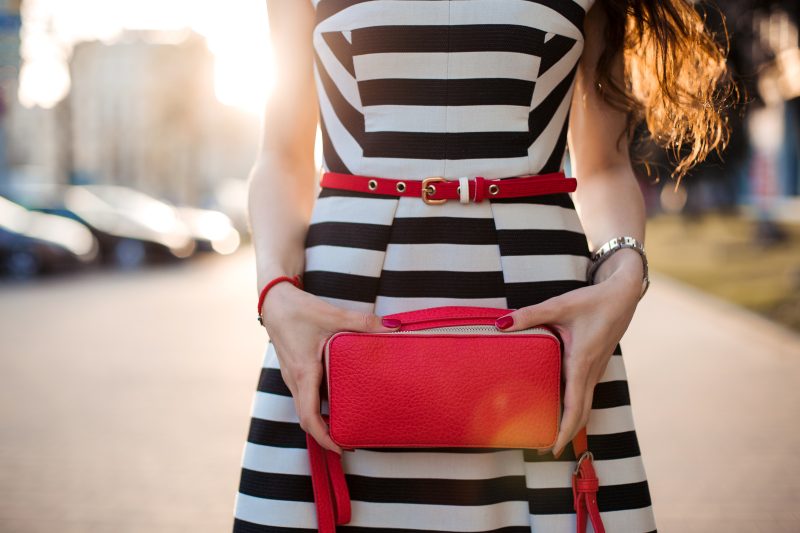
Moira Rose gave me the greatest joy but also the most physical discomfort. The structured black and white outfit with architectural details required perfect posture at all times, and the wig (borrowed from a theater friend) was secured so tightly that I developed a tension headache by 10 AM. Worth it, though, for the sheer delight of responding to emails with unnecessarily complicated vocabulary and theatrical pronunciations that I dictated to my phone while my officemate stared in silent horror.
By the time I reached day seven—a Fleabag-inspired jumpsuit and messy bob look that felt almost comfortingly close to my actual aesthetic—I was exhausted but enlightened. The experiment had revealed the armor and opportunity that clothing provides, how we both hide behind and express ourselves through fabric and silhouette.
The most profound insight came from tracking how differently the world responded to essentially the same person packaged in different visual coding. Meetings I’d been trying to secure for weeks suddenly happened when I emailed as Carrie-Harper. Design concepts I’d previously pitched that were deemed “too academic” were enthusiastically approved when presented by Villanelle-Harper with exactly the same wording.

A week later, back in my usual uniform of black trousers, oversized button-downs, and boots that hit the sweet spot between fashion and function, I found myself pausing before a mirror in the office restroom. The reflection showed the Harper James recognized by the industry—polished, slightly intimidating, knowledgable.
But now I knew something about that reflection that I hadn’t fully understood before. That image wasn’t an immutable truth but a conscious creation, one of many possible versions I could present. The experiment had stripped away the illusion that any of us have a fixed presentation—we’re all just trying on characters, testing how they fit against our internal reality and the external world’s response.
“So what’s the conclusion?” Emma asked over brunch that weekend, scrolling through the photo documentation of my seven personas. “Which one got the best response?”
I considered the question while absently stirring my coffee. “It’s not about the best response,” I finally said. “It’s about the most authentic one. And the weird thing is, I felt glimpses of authenticity in all of them—even Moira Rose, for God’s sake.”
Emma looked skeptical. “So you’re saying the real Harper James is… all of them?”
“Maybe,” I shrugged. “Or maybe none of them. But I think understanding that distinction is what fashion is actually about—not finding the perfect character to play but recognizing that the costume and the actor are always in dialogue.”
Emma rolled her eyes. “That’s very profound for someone who made an intern cry over photo retouching.”
I threw a napkin at her. Some things never change, no matter what you’re wearing.