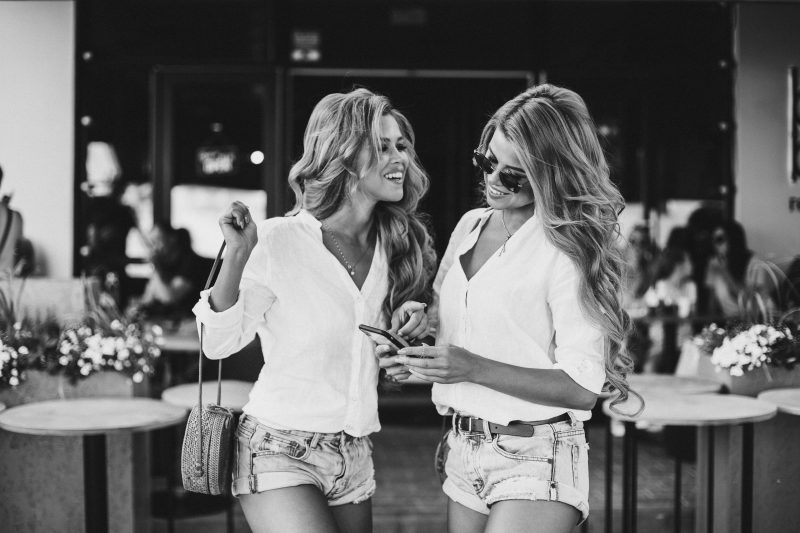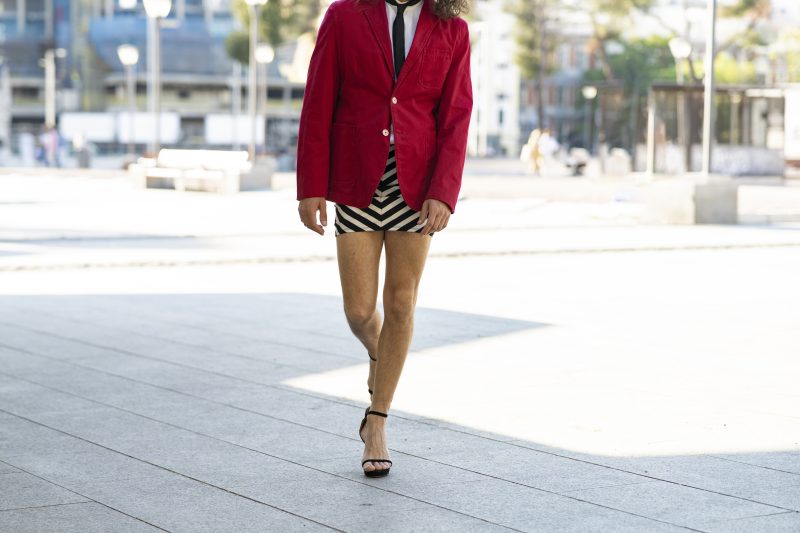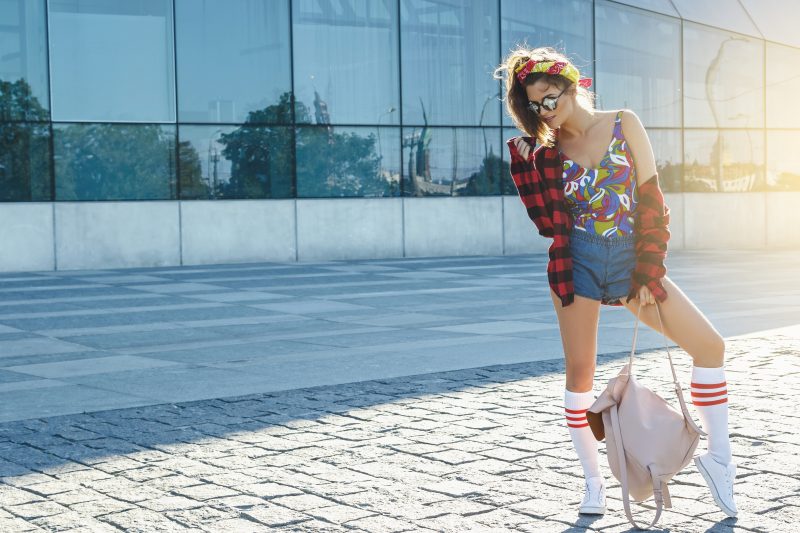
Last Tuesday morning, I stood in front of my closet having what I’ve come to call a “fashion dissociative episode.” It was 7:45 AM, I had a 9:00 AM meeting with a major advertiser, and I found myself paralyzed by the absolute chaos of options hanging before me. A prairie dress with puffed sleeves next to low-rise cargo pants. A tailored blazer sharing hanger space with a sheer baby tee. Balletcore Mary Janes lined up beside chunky dad sneakers that would give my orthopedist heart palpitations.
“What the actual hell is happening in fashion right now?” I texted Emma, knowing she’d be awake and equally confused about her own wardrobe choices. “I have no idea what looks current anymore.”
Her response came immediately: “Wear whatever. It’s all in and all out simultaneously. We’re living in fashion anarchy.”
She’s right. And I’m not the only one feeling it. In conversations with stylists, designers, buyers, and fellow editors, the same bewildered sentiment keeps surfacing: We’ve entered an unprecedented era where the concept of clear trends has collapsed into a multiverse of conflicting aesthetics, all somehow coexisting as “fashion.”
Think about it. In what other era could Y2K butterfly tops, 90s minimalism, 80s power shoulders, cottagecore prairie dresses, futuristic techwear, and 70s crochet all be considered simultaneously trendy? We’re not talking about subtle variations on a dominant silhouette—we’re witnessing completely contradictory fashion philosophies existing in parallel universes, yet all claiming space in the current moment.
At New York Fashion Week last season, I watched a street style circus unfold outside Spring Studios that perfectly captured this chaos. Within a twenty-foot radius: three women in balletic sheer skirts with leotards, a group in oversized deconstructed suits that looked straight from 1997, someone in a full ravewear look complete with platform boots, and an influencer in what appeared to be her grandmother’s tablecloth reimagined as a dress. None of them looked out of place because, apparently, nothing is out of place anymore.

“We’re definitely in uncharted territory,” Simone, our endlessly wise fashion director, told me when I cornered her by the coffee machine to discuss my theory. “In past eras, even when multiple trends coexisted, there was usually a dominant silhouette—a shared understanding of proportion that defined the moment. Now? It’s complete silhouette anarchy.”
She gestured vaguely at the Style Compass USA office, where our team embodied this exact phenomenon: merchandising editors in sleek minimalist column dresses, social media managers in chaotic Y2K layering, market editors in Japanese workwear-inspired separates. Everyone looked fashionable, yet no single aesthetic could claim dominance.
Fashion historians will eventually name this strange era we’re living through, but for now, I’m calling it the Post-Fashion Era—a time when the machinery of trend cycles continues to operate but has lost its authority over how we actually dress.
How did we get here? I have a few theories.
First, there’s the collapse of unified media. Remember when a handful of magazines and retailers essentially dictated each season’s must-haves? That centralized trend authority has splintered into millions of micro-influencers, each with their own aesthetic tribes. When I started in this industry, you could attend five key runway shows and understand the direction of the coming season. Now I can watch 50 shows and come away more confused than when I started.
The algorithmic fragmentation of our social media feeds has accelerated this chaos. Depending on your digital behavior, you might be served an entirely cottagecore TikTok experience while your roommate gets nothing but coastal grandmother content and your colleague drowns in balletcore. Each person exists in their own trend reality, convinced their aesthetic bubble represents the dominant fashion conversation.
“It’s like we’re all speaking different fashion languages now,” Emma said over lunch last week. “I was just in a meeting where someone called skinny jeans ‘completely out,’ and then I walked outside and saw three impossibly chic women wearing them with giant shoulder-pad blazers. Who’s right anymore?”
The answer is increasingly: everyone and no one.
Then there’s the collapse of the seasonal rhythm that once gave fashion its structural backbone. Fall/Winter and Spring/Summer collections have dissolved into a constant churn of drops, capsules, and collaborations. Fast fashion brands release hundreds of new styles weekly rather than seasonally. The result is a perpetual now where everything is happening simultaneously rather than in the orderly progression that once characterized trend cycles.
Ryan, my boyfriend who works in music and claims to know nothing about fashion (though he has Strong Opinions about my outfit choices), made an observation last month that felt unnervingly accurate. “It’s like when streaming killed the concept of ‘what’s current’ in music,” he said, watching me try on four completely different aesthetic directions before dinner. “When everything from every era is equally available and nothing has time to build consensus, you end up with this chaotic buffet where nobody’s sharing the same reference points.”
The pandemic threw gas on this already smoldering fire. Two years of working from home fractured our collective understanding of “appropriate” or “current” dressing. When we emerged, blinking into the post-lockdown world, it was with a kind of tentative fashion amnesia. What were we wearing before? What are we supposed to wear now? In the absence of clear answers, we chose everything at once.
Sustainability consciousness has played a role too. As more consumers reject the churn of disposable trends, personal style has taken precedence over seasonal must-haves. Vintage and secondhand shopping has exploded, further jumbling our temporal fashion references. When the coolest piece in your outfit might be from 1976 or 1998 or 2017, the very concept of “current” becomes meaningless.
Last week, I interviewed Tyler, a 24-year-old design assistant at a major American fashion brand, for a piece on emerging talent. His perspective was illuminating: “My generation doesn’t really believe in the idea of things being ‘in’ or ‘out,'” he told me, wearing what appeared to be multiple decades of references in a single outfit. “That’s some weird millennial hang-up. We just mix whatever feels right.”
I felt simultaneously enlightened and personally attacked.
The brand strategists I speak with are equally baffled by this new landscape. “We used to be able to identify clear cohorts and their aesthetic preferences,” explained Mia, a consumer insights director at a luxury conglomerate, during a recent industry panel. “Now we’re seeing completely contradictory aesthetics being embraced by the same demographic groups. The data doesn’t make any traditional sense.”
There are real business consequences to this chaos. Retailers are struggling to predict what will sell, resulting in both overstocked warehouses and frustrating stockouts. Designers can’t rely on clear trend forecasting to guide their collections. Fashion media (including yours truly) can no longer confidently proclaim “what’s in and what’s out” without sounding hopelessly out of touch.
Even celebrity fashion—once a reliable barometer of consensual trends—has splintered. Take any red carpet from the past year: you’ll see minimalist column dresses alongside maximalist pattern explosions, modest high necks alongside daring cutouts, futuristic metallics alongside vintage references. Analyze the “best dressed” lists, and you’ll find contradictory aesthetics praised with equal enthusiasm.
To navigate this strange new world as a consumer requires abandoning some deeply ingrained fashion beliefs. The first is the idea that trends move in a clear linear progression, with definitive beginnings and endings. We’re now experiencing something more circular and simultaneous—less trend cycles, more trend multiverse.
The second is the belief that fashion consensus still exists in any meaningful way. It increasingly doesn’t. What reads as hopelessly dated in one context might be cutting-edge revival in another. The skirt length that’s revolutionary in Milan might be basic in Brooklyn.
“I’ve stopped trying to identify what’s definitively trending,” admitted Katherine, a veteran trend forecaster I’ve known for years, when we caught up at an industry event last month. “Instead, I’m tracking smaller aesthetic ecosystems and how they’re evolving independently. The big unified narrative just doesn’t exist anymore.”
So how do you get dressed in a post-fashion era? I’ve been developing some survival strategies that I’ll share—not as fashion edicts (those don’t work anymore) but as one confused person to another.
First, I’ve embraced aesthetic commitment over trend-chasing. Rather than attempting to keep up with every splintered micro-trend, I’m focusing on defining and refining a personal style that can absorb influences without being derailed by them. This doesn’t mean boring uniform dressing—it means having a clear point of view that serves as a filter for the chaos.
Second, I’m approaching getting dressed with more playfulness and less anxiety. If nothing is definitively “wrong,” there’s freedom in that chaos. I’ve been experimenting with combinations I would have dismissed as “incorrect” a few years ago, often with surprisingly positive results. Last month I wore a delicate slip dress over jeans to a gallery opening—a styling approach I would have considered fashion blasphemy in 2019—and received more compliments than any “correct” outfit I’ve worn recently.

Third, I’m paying attention to how clothes make me feel rather than how closely they align with any external fashion consensus. This sounds simple but represents a radical shift from how many of us were taught to approach fashion—looking outward to magazines and authorities rather than inward to our own responses.
For fashion professionals, this chaotic era requires a complete recalibration of how we discuss style. The authoritative “this is in, this is out” pronouncements that once defined fashion editorial feel increasingly hollow and disconnected from reality. Instead, we need to embrace more nuanced, contextual discussions that acknowledge the multiple valid aesthetic realities coexisting right now.
“Fashion isn’t dead, but the singular fashion narrative has flatlined,” Simone observed during our last editorial meeting. “We need to talk about fashions, plural, with equal legitimacy.”
She’s right. And while navigating this fractured landscape can feel overwhelming, there’s something liberating about the collapse of rigid trend authority. The post-fashion era offers unprecedented freedom to develop a genuinely personal relationship with clothes—to dress for yourself rather than for the approval of some centralized taste arbiter.
So yes, getting dressed is undeniably weird right now. My closet remains a chaotic testament to conflicting trend narratives and splintered aesthetics. Just this morning, I stood before it wearing vintage 501s with a ballet flat on one foot and a chunky loafer on the other, genuinely unable to determine which felt more “current.”
But I’m finding unexpected joy in this weird era—in the permission to play rather than comply, to explore rather than follow. Perhaps that’s the silver lining of the post-fashion era: when the rules dissolve into chaos, we’re finally free to write our own.