Let me tell you about the Tuesday I almost threw my phone out my 15th-floor office window while trying to recreate what looked like the world’s most effortless business casual outfit from Instagram. There I was, in my bedroom at 6:30 AM, attempting to make a silk button-down look simultaneously oversized and fitted, paired with wide-leg trousers that somehow appeared tailored through the hips but flowy everywhere else. Twenty-five minutes later, after enough contorting to qualify as cardio, I finally admitted defeat to my reflection.
“This is literally impossible,” I muttered, while my poor houseplant watched me have what can only be described as a fashion breakdown. “Either I’m missing some basic styling gene or someone’s lying to me.”
Spoiler alert: it was definitely the lying.
After years of working in finance and obsessing over how to make professional outfits look effortless—you know, that sweet spot between “I care about my appearance” and “I didn’t spend three hours getting dressed”—I hit my breaking point with Instagram fashion. So I did what any reasonably frustrated person with too much curiosity and a decent LinkedIn network would do: I started asking questions. Lots of them.
I reached out to every stylist, photographer, and reformed influencer I could find through mutual connections. I DMed people who seemed willing to spill some tea. I even convinced a friend who works in digital marketing to introduce me to someone who’d worked behind the scenes on fashion campaigns. What I discovered made me feel simultaneously vindicated and slightly betrayed.
Those “just threw this on” outfits that make you question your entire relationship with clothing? They’re often held together by enough fashion tape and clips to stock a small office supply store.
“Girl, nothing you see is actually wearable,” laughed Maya, a former lifestyle influencer who now works in brand strategy. “I once spent four hours shooting content in a blazer that was three sizes too big because it was the only sample available. You’d never know from the photos because my assistant spent most of the day crouched behind me with a handful of binder clips, basically redesigning the entire back of the jacket.”
This isn’t uncommon, apparently. Sample sizes arrive for collaborations that don’t fit, but instead of requesting different sizes—and potentially losing a five-figure partnership—they just engineer the garment into submission. The clothes look perfect from the front and sides, but from behind? Complete construction zone.
“We’re essentially creating clothing that doesn’t exist,” explained Carmen, a freelance stylist who’s worked with several major fashion influencers. “Every tool you can imagine gets deployed. Double-sided tape, clips, pins, even clear rubber bands to cinch fabric exactly where we need it. The goal is creating shapes and silhouettes that look natural but absolutely aren’t.”
The front-tuck situation particularly annoyed me because I’ve tried to master this look for years. You know the one—that perfectly casual half-tucked shirt that somehow always falls exactly right and never budges? Turns out there’s a reason I can never recreate it.
“Nobody actually wears their shirt like that,” Carmen told me, laughing. “It either gets taped in place, which is uncomfortable and weird, or it’s only tucked for the thirty seconds it takes to shoot the photo. The minute you move or sit down, it looks terrible.”
But the manipulation goes way beyond just clips and tape. The cameras themselves are creating optical illusions.
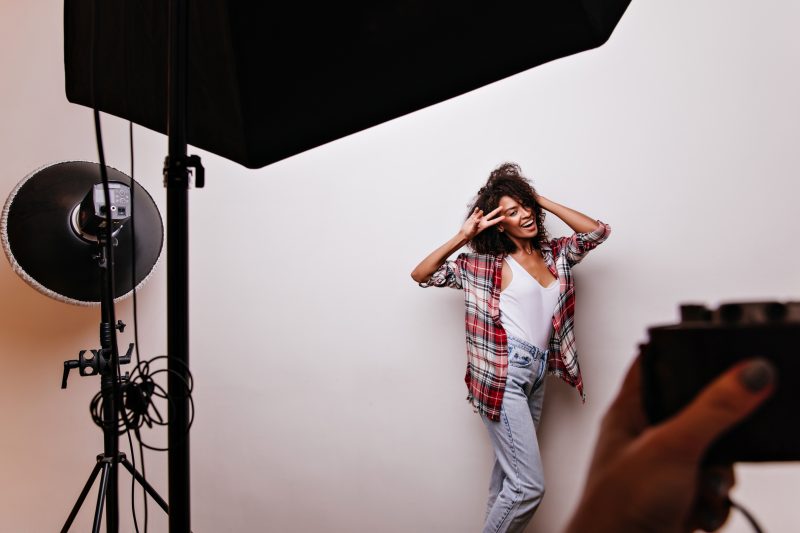
I talked to Jessica, a photographer who’s shot campaigns for both major brands and influencers, and she broke down exactly how angles and lenses are being used to create impossible-looking outfits.
“There’s a very specific pose that almost everyone uses now,” she explained. “Slightly above eye level, one hip popped, weight on the back foot, subtle lean toward the camera. Combined with the natural wide-angle effect from phone cameras, it creates this elongating effect that makes everything look more flattering than it actually is.”
She went on to describe how tiny adjustments completely transform how clothes photograph. Leaning slightly forward makes oversized pieces drape better. Shooting from below makes pants look longer. That candid “walking” shot that looks so natural? Usually involves barely lifting one heel while standing basically still, because actual movement would mess up all the careful styling.
And then there’s the editing. Oh, the editing.
“Most outfit posts go through multiple apps before they hit Instagram,” said Alex, a content creator who’s worked alongside major fashion accounts. “First for lighting and color, then for body adjustments, then for clothing corrections. I’ve watched people digitally nip in waistlines on jackets, adjust how sleeves fall, even change the way fabric drapes.”
Look, part of me wants to be outraged about this—and initially I was. But I’ve had to admit that fashion photography has always been about creating fantasy rather than documenting reality. Magazine editorials have used every trick in the book for decades. The difference is that magazines were obviously produced content, while Instagram presents itself as authentic glimpses into real life.
When I see a perfectly styled editorial spread, I know there was a team of professionals making everything look flawless. When someone posts what appears to be a casual mirror selfie with “just grabbed whatever from my closet,” the implied authenticity makes discovering the manipulation feel more… personal somehow.
So what exactly are these tricks? After weeks of conversations, I’ve compiled a comprehensive list of the most common styling illusions:
The clip technique is everywhere. Binder clips, chip clips, actual styling clamps—they’re all being used to create perfect tension and fit by gathering excess fabric at the back. This can create waistlines where none exist naturally, make boxy items appear fitted, and generally alter the entire cut of a garment. The catch? You can’t actually move normally while wearing something that’s been clipped to death.
Fashion tape has evolved beyond just preventing wardrobe malfunctions. It’s now used to create perfectly positioned collars, necklines that don’t shift, sleeves that stay rolled exactly right, and hems that never move. One person told me she regularly uses twenty pieces of tape for a single outfit post.
Strategic pinning creates perfect pleats, controls draping, and fixes any gapping issues. Unlike clips, pins can be used on visible parts of the outfit, then the pin heads either get hidden behind fabric or edited out later.
Clear elastic bands temporarily tailor clothes by gathering fabric in strategic places. This is especially common for creating the perfect trouser silhouette—they’ll cinch excess fabric at the back of the knee so pants don’t bag while maintaining an unnatural pose they’d never hold in real life.
Targeted shapewear has replaced full foundation garments. Instead of wearing complete pieces, they’re using specific compression only where needed for the camera angle and outfit, allowing for more natural movement everywhere else.
The “perfect scrunch” on sleeves and rolled jeans isn’t casual at all. These are meticulously arranged, often secured with hidden elastics or temporary stitches, sometimes even steamed into position specifically for photos.
Camera angles hide the true fit of everything. Overhead shots slim hips and waists while making tops look more oversized. Side angles with a forward leg make pants appear longer. Three-quarter turns hide any back gapping. It’s basically a science of creating a composite image of an outfit that doesn’t actually exist from all viewpoints.
And finally, post-production fit corrections go beyond obvious body editing to digitally tailoring the clothes themselves. Smoothing wrinkles, deepening colors that photograph poorly, even completely redrawing how garments drape.
Once you know what to look for, though, these illusions become pretty obvious. Does a flowy outfit somehow also perfectly define a waistline? Clips. Does a casual shirt never shift between multiple photos? Tape city. Do oversized pieces never overwhelm the frame? Strategic pinning and very specific angles.
Some content creators are pushing back against this trend. I found several who regularly show the reality behind their styled photos—the clips, the awkward poses, how terrible the same outfit looks from different angles.
“My followers actually prefer seeing the behind-the-scenes mess,” said Rachel, a fashion content creator who’s built her following on transparency. “They want to know that even people who look put together in photos don’t actually walk around with perfectly styled clothes all day.”
A few brands are catching on too. Some now require influencers to show movement in their clothes or specifically prohibit extensive styling tricks in their contracts.
“We started requesting walking shots, sitting down, reaching up—actions that immediately reveal if something’s been clipped or pinned,” explained Lisa, who works in marketing for a contemporary fashion brand. “We want customers to see how our clothes actually fit and move in real life, not just how they can be manipulated to look for thirty seconds.”
As for me? I’ve made peace with the fact that my business casual outfits will never achieve that Instagram-perfect aesthetic without serious behind-the-scenes engineering. These days I’m more interested in how clothes actually feel during ten-hour workdays and whether I can wear them to client meetings without constantly adjusting everything.
That said, I did buy some fashion tape after writing this. Not for social media—just for that one silk blouse that never stays put during presentations. Even corporate professionals can appreciate a good hack, as long as we’re honest about it.

By day, Jasmine works in finance. By night, she writes about making corporate fashion actually interesting. Her Boston wardrobe proves office-appropriate doesn’t have to mean boring, and that investment dressing can be both powerful and personal.