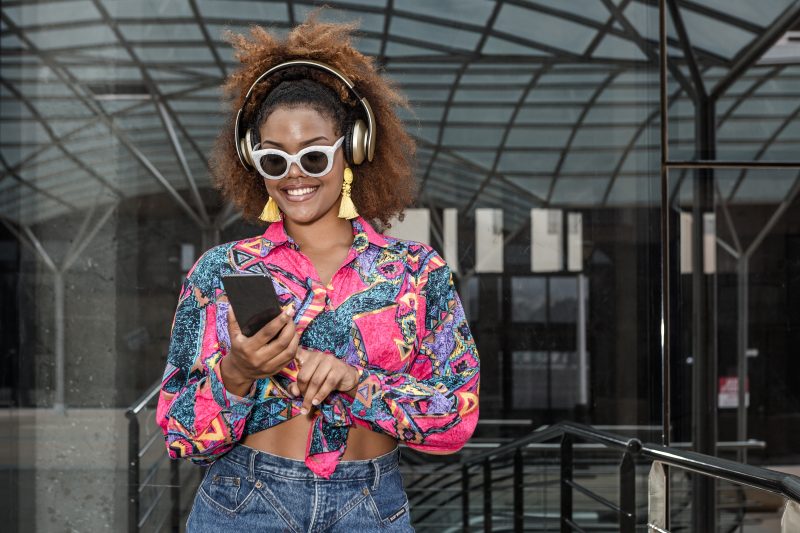
So this whole mess started because I can’t make basic decisions about what to wear. I’m standing in my closet every morning like I’m solving some kind of mathematical equation, holding up different tops and wondering if wearing the same jeans three times this week makes me a fashion failure or just practical. You’d think after writing about clothes for three years I’d have this figured out, but apparently not.
My friend Sarah came over last month while I was having one of these closet meltdowns. She works in tech and wears literally the same outfit variation every single day – black jeans, white t-shirt, denim jacket. I used to think this was boring but honestly I’m starting to think she’s figured something out that the rest of us haven’t.
“Why don’t you just ask ChatGPT what to wear?” she said, scrolling through her phone while I threw rejected outfits on my bed. “Bet it would be better than whatever decision paralysis thing you’ve got going on here.”
I laughed because obviously that’s ridiculous. But then I kept thinking about it. Like, what would actually happen if I let AI make all my outfit decisions for a month? Would I look insane? Would I discover some hidden style genius? Would my entire sense of self collapse because I wasn’t agonizing over whether this sweater makes me look washed out?
The more I thought about it, the more curious I got. Plus I needed content for the site and this seemed like exactly the kind of weird experiment my readers would either love or think proves I’ve completely lost it. Either way, engagement.
I spent an entire weekend cataloging my closet. Every single piece. Took photos, made a spreadsheet, categorized everything by color and type and occasion. It was deeply depressing to see how much stuff I own that I never wear. There’s this whole section of my closet that’s basically “things I bought because they looked good on the mannequin but have never figured out how to actually put on my body.” We’re talking like forty percent of my wardrobe.
The first week was honestly boring. ChatGPT kept suggesting these perfectly reasonable combinations – black pants with a nice blouse, jeans with a sweater, basic stuff I might have picked myself. I was almost disappointed. Where was the chaos? Where were the terrible decisions that would make good copy?
Then things got interesting.
Day eight, ChatGPT told me to wear this vintage band t-shirt I bought at a thrift store two years ago with my “structured blazer and wide-leg trousers.” The t-shirt was from some random 80s metal band I’d never heard of, super soft and thin from decades of washing. I’d bought it thinking I’d wear it on weekends but it had just been sitting there judging me.
The combination should have looked ridiculous. Like I couldn’t decide if I was going to a board meeting or a dive bar. But somehow it worked? The blazer made the t-shirt look intentional instead of sloppy, and the t-shirt made the blazer look less uptight. I got more compliments that day than I’d gotten in weeks.
This became a pattern. ChatGPT would suggest combinations that made no sense to me, but when I actually put them on, they’d somehow come together. It was like having a stylist who wasn’t limited by all my weird mental rules about what goes with what.
The real breakthrough came when it told me to wear this yellow midi skirt I’d impulse-bought last spring. I’d tried it on exactly once, decided it was too bright for my complexion or my personality or whatever excuse I made up, and it had been hanging there ever since with the tags still on. ChatGPT paired it with a simple black turtleneck and ankle boots, nothing groundbreaking, but suddenly this piece I’d written off as a mistake became my new favorite outfit.
That’s when I realized how many arbitrary rules I’d created for myself. This is too bold. That’s not work-appropriate. I can’t wear that color. I’m not cool enough for that style. None of these rules came from anywhere real – they were just stories I’d made up and then followed religiously.
The worst suggestion came on day fifteen. ChatGPT wanted me to wear this ridiculous printed dress I’d bought online during a late-night shopping spree and never returned, paired with a denim jacket and hiking boots. Hiking boots. With a dress. The whole outfit screamed “I’m having an identity crisis and expressing it through clothing choices.”
But I wore it anyway, because commitment to the bit, and you know what happened? Three different people stopped me on the street to ask where I got the dress. A photographer asked if he could take my picture for some street style thing. I felt completely ridiculous and somehow completely confident at the same time.
The really weird part was how wearing these random combinations started changing how I thought about getting dressed in general. I stopped overthinking everything so much. When you’ve worn metallic pants to a work meeting and survived, regular outfit decisions seem less high-stakes.
I also realized how much of my closet I’d been ignoring. There were pieces I’d bought with good intentions but then never incorporated into my actual daily life. The fancy silk blouse that felt “too nice” for normal days. The statement earrings I was “saving” for special occasions. The vintage leather jacket that seemed too cool for someone who works in marketing and spends most evenings on her couch watching reality TV.
ChatGPT didn’t care about any of my insecurities or self-imposed limitations. It just saw items and combined them based on whatever algorithm it uses. No emotional baggage about that one time someone made a weird comment about my arms, or anxiety about being overdressed, or fear that people would think I was trying too hard.
By week three I was actually getting excited to see what it would suggest next. Some days were disasters – there was this unfortunate incident with a crop top and high-waisted pants that made me look like I was cosplaying as a teenager from 2003. And the day it suggested white jeans when rain was forecasted… let’s just say that didn’t end well.
But more often than not, I’d end up with outfits that I never would have tried but actually really liked. I started taking photos every day, partly for the article but mostly because I was genuinely curious to see how each experiment would turn out.
The biggest surprise was how much more interesting my style became when I stopped playing it safe. All those “reliable” outfits I’d been defaulting to were fine, but they were also incredibly boring. They didn’t reflect any personality or creativity – they were just… neutral. Professional. Forgettable.
On the last day, I asked ChatGPT to create what it thought was the perfect outfit from my wardrobe. I was expecting something dramatic after weeks of increasingly bold suggestions. Instead, it chose the most basic combination possible – straight-leg jeans, white button-down, black blazer. Simple gold jewelry. Nothing revolutionary.
I was almost insulted. This was the grand finale? But when I put it on, something was different. Maybe it was having spent a month wearing silver boots and printed pants and color combinations that shouldn’t work but do. Maybe it was just being less self-conscious about the whole thing. But this basic outfit felt better than it ever had before.
Sarah came over that night to hear about the whole experiment. She looked at my final AI-chosen outfit and raised an eyebrow.
“This is what it picked for the big conclusion? Kinda basic.”
I shrugged. “Yeah, but I like it.”
And I did. Not because it was groundbreaking or Instagram-worthy, but because for the first time in forever, I’d put on clothes without spending twenty minutes second-guessing every choice. The outfit was fine, I looked fine, and that was enough.
The whole experiment taught me that most of my clothing anxiety was completely made up. All those rules about what works and what doesn’t, what’s appropriate for my age or job or body type – most of it was just noise. Sometimes you wear metallic pants to a meeting and the world doesn’t end. Sometimes you pair a band t-shirt with dress pants and people think it’s genius. Sometimes the best outfit is just jeans and a nice top, worn without overthinking.
I’m back to dressing myself now, but I’ve kept some of the AI’s lessons. I wear those ignored pieces more often. I try combinations that seem wrong until they’re right. I spend way less time staring into my closet like it holds the secrets of the universe.
Though I did have to draw the line when Sarah suggested I let TikTok plan my skincare routine for a month. Some experiments are too dangerous, even for content.

Claire started Claire Wears to bridge the gap between fashion media and real life. Based in Chicago, she writes with honesty, humor, and a firm “no” to $300 “affordable” shoes. Expect practical advice, strong opinions, and the occasional rant about ridiculous trends.