My phone buzzed at 6:47 AM on a random Thursday with a text from my friend Maya, who works at a tech startup in San Francisco: “Okay but why do all the finance girls on my feed look cooler than everyone in Silicon Valley?” She’d attached a screenshot of some TikTok user in what appeared to be a perfectly normal work outfit – navy blazer, white button-down, black trousers – except something about it looked completely different from the soul-crushing corporate uniforms I’d been wearing for the past eight years.
I squinted at my phone, still half-asleep, trying to figure out what exactly made this outfit look so… intentional? The proportions seemed slightly off in an interesting way – the blazer was oversized, almost drowning her, but paired with fitted pants that hit at exactly the right spot above chunky loafers that definitely weren’t regulation office footwear. Her makeup was sharp, precise in a way that suggested she’d spent actual time on it, and her hair looked like she’d gotten it done professionally rather than thrown into the sad bun I’d been sporting for most of 2024.
“Corporate baddie,” Maya texted next. “Apparently it’s a whole thing.”
I had absolutely no idea what she was talking about, but thirty minutes later I was deep in a rabbit hole of TikTok videos tagged #corporatebaddie, watching twenty-something women get ready for work in outfits that somehow managed to be completely professional while also looking like they actually gave a damn about fashion. This was not the Ann Taylor industrial complex I’d grown up in – this was something entirely different.
The thing is, I’ve been working in corporate finance in Boston for almost a decade now, and I thought I had professional dressing figured out. You buy expensive basics in neutral colors, you don’t show too much skin, you invest in good shoes that won’t kill your feet during long days, and you try to look competent without being threatening. It’s a delicate balance that I’d spent years perfecting, building a wardrobe of Theory blazers and Equipment blouses that could take me from client meetings to after-work events without anyone questioning my professionalism.
But watching these videos, I realized how boring my approach had become. When did I decide that being taken seriously required visual invisibility? When did I accept that work clothes needed to be completely separate from clothes I actually wanted to wear?
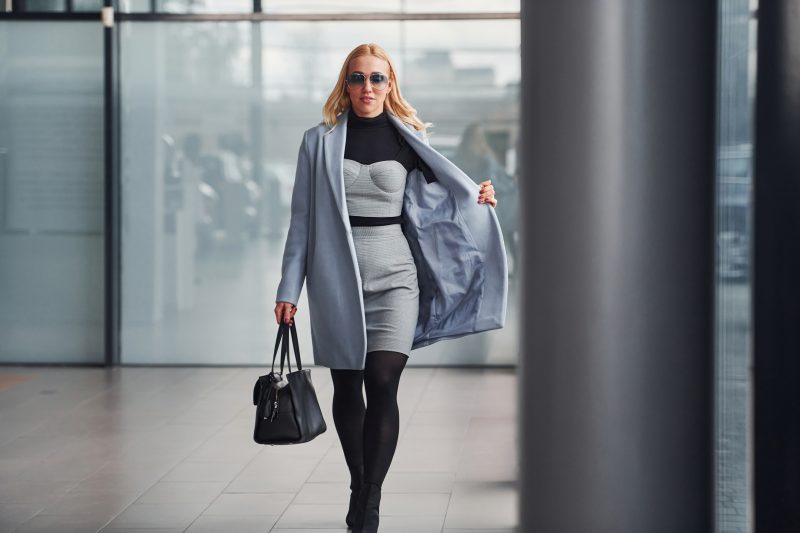
The corporate baddie aesthetic – and yes, I’m using that term now because I can’t think of a better one – seems to reject this entire premise. These women are wearing recognizably professional pieces, but they’re styling them with personality, mixing proportions in unexpected ways, adding accessories that actually make a statement, and generally treating work as another opportunity to express personal style rather than suppress it.
I started paying closer attention to what younger women in my office were wearing, and sure enough, I could spot the influence everywhere. Sarah from our investment team had started wearing these chunky platform loafers that should have looked ridiculous with her conservative pants, but somehow worked perfectly. Jessica from accounting had been layering delicate gold necklaces over her button-downs, creating visual interest without technically breaking any dress codes. Even our newest associate, who couldn’t be older than twenty-five, was wearing classic pieces in color combinations I never would have considered – deep forest green with chocolate brown, burgundy with navy – that somehow looked both professional and completely fresh.
The more I researched this trend, the more I realized it wasn’t just about clothes. It was about questioning fundamental assumptions about what professionalism looks like and whether the visual conformity previous generations accepted as necessary was ever actually required for career success.
I decided to experiment. My first attempt was subtle – I swapped my usual pointed-toe flats for a pair of platform loafers I found at & Other Stories, worn with my standard black pants and white shirt. The difference was immediate. Suddenly my outfit had dimension, visual weight, an intentionality that my previous combinations lacked. Two different people complimented my shoes that day, including a partner who rarely comments on anything besides quarterly reports.
Encouraged by this success, I started pushing further. I tried the oversized blazer approach, buying a men’s blazer from COS and having it tailored slightly to maintain structure while preserving the deliberately loose proportions. Paired with fitted pants and my new platform shoes, it created this interesting contrast between sharp and relaxed that somehow read as both professional and effortlessly cool.
The makeup component took me longer to figure out. I’d been stuck in the same neutral routine for years – tinted moisturizer, mascara, maybe a swipe of lip balm if I was feeling fancy. But the corporate baddie approach treats makeup as part of the overall styling strategy, not an afterthought. I started experimenting with more defined looks – sharper liner, bolder lip colors, actually contouring my cheekbones like I learned from YouTube tutorials during lockdown but never actually implemented.
The response from colleagues has been fascinating to observe. Older partners occasionally seem puzzled by the shifts in my presentation, but younger team members and clients have responded incredibly positively. I’ve started getting compliments not just on specific pieces, but on my overall “style,” which is not a word anyone had ever applied to my work wardrobe before.
More importantly, I feel different when I’m dressed this way. There’s something about bringing intentional personal style into professional contexts that makes me feel more confident, more authentically myself. I’m not hiding behind neutral colors and conventional proportions – I’m bringing my actual aesthetic preferences into my work presentation while still maintaining appropriate professionalism.
The financial aspect is interesting too. Instead of building completely separate wardrobes for work and personal life, the corporate baddie approach emphasizes versatility and creative styling. That oversized blazer I bought for the office works equally well over a slip dress for dinner or with jeans on weekends. The platform loafers transition seamlessly from client meetings to gallery openings. I’m spending less money overall while having more fun with my clothes.
This shift toward versatile, personally expressive professional wear reflects broader changes in workplace culture that accelerated during the pandemic. As traditional office structures became more flexible, the rigid dress codes that accompanied them started feeling increasingly arbitrary. Why should competence be associated with visual conformity? Why should personal style and professional credibility be mutually exclusive?
I’ve noticed that the most successful implementations of this aesthetic involve strategic rule-bending rather than outright rebellion. It’s about finding the technical compliance points within dress codes while maximizing opportunities for creative expression. A crop top becomes acceptable when worn with high-waisted pants that maintain overall coverage. Platform shoes work when they’re in classic colors and paired with conservative silhouettes. Bold makeup feels professional when the clothing remains relatively understated.
The genius of the corporate baddie approach is that it’s modular – you can dial elements up or down depending on the specific professional context. Client presentation days might call for more conservative interpretations, while internal meeting days allow for bolder expressions. It’s about developing fluency in professional presentation rather than following rigid rules.
I’ve also noticed how this aesthetic handles the specific challenges of being a woman of color in corporate environments. The traditional advice about not drawing attention to yourself, about blending in to be taken seriously, feels increasingly outdated. The corporate baddie approach acknowledges that we’re going to be noticed anyway – might as well be noticed for having excellent style alongside professional competence.
The color combinations alone have revolutionized how I think about work dressing. Instead of the navy-black-beige rotation I’d relied on for years, I’ve started experimenting with richer, more unexpected pairings. Chocolate brown with cream, deep burgundy with forest green, even touches of unexpected colors through accessories and makeup. These combinations signal creativity and confidence while still reading as sophisticated.
What I love most about this evolution is how it challenges the premise that professional success requires aesthetic self-erasure. Previous generations were told that standing out visually could be a career liability, that the safest approach was to look as conventional and unmemorable as possible. The corporate baddie movement questions whether that was ever actually true or simply a control mechanism that limited authentic self-expression without providing real professional benefits.
My own experience suggests the latter. Since incorporating these elements into my work wardrobe, I’ve received more positive feedback on presentations, more invitations to high-visibility projects, and generally more engagement from both colleagues and clients. Rather than undermining my credibility, intentional personal style has enhanced it.
The key is understanding that this isn’t about rejecting professionalism entirely – it’s about redefining what professionalism can look like. The foundation remains the same: appropriate coverage, quality pieces, polished presentation. But within those parameters, there’s much more room for creativity and personal expression than traditional office dress codes suggested.
For anyone interested in incorporating corporate baddie elements into their own professional wardrobe, I’d recommend starting small and building gradually. Experiment with one unexpected element – platform shoes, an oversized blazer, a bold lip color – and see how it feels in your specific workplace environment. Pay attention to the response from colleagues and clients, but also to your own confidence levels and comfort.
The most successful adaptations I’ve observed involve understanding your specific industry’s boundaries and finding creative ways to work within them. Finance remains more conservative than tech or creative fields, but there’s still significant room for personal expression within professional requirements. It’s about developing fluency in your workplace’s visual language while finding opportunities to inject personality.
This movement represents more than just a fashion trend – it’s a visual manifestation of changing attitudes toward work-life integration and authentic self-expression. For a generation that watched their parents sacrifice personal identity for professional advancement without receiving corresponding loyalty from employers, bringing your whole self to work feels less like rebellion and more like common sense.
The corporate baddie aesthetic acknowledges that we’re complex people with lives and interests beyond our jobs, and our professional presentation can reflect that complexity while still demonstrating competence and respect for workplace norms. It’s about rejecting the false choice between personal style and professional success, proving that maybe we never needed to choose between them in the first place.

By day, Jasmine works in finance. By night, she writes about making corporate fashion actually interesting. Her Boston wardrobe proves office-appropriate doesn’t have to mean boring, and that investment dressing can be both powerful and personal.