i still have nightmares about the low-rise jeans. not the somewhat cute, slightly hip-slung ones that brushed against the top of your hips—but the ones that sat about 3 inches below your belly button and made you a prisoner to constant vigilance and total avoidance of the normal human activities of sitting and bending over. the ones that caused the infamous “muffin top” on nearly everyone (except paris hilton circa 2003) and made thongs a necessary evil and lower back tattoos an entire identity.
“those will never come back,” i assured my assistant taylor when we were discussing cyclical trends in fashion. “some things are simply objectively bad ideas that we all collectively learn from. low-rise jeans are the equivalent of touching a hot stove—you only do it once.”
fast forward to last week when taylor sent me links to three designer collections that featured jeans that were so low-rise they were basically denim belts, accompanied by street style photos of gen z fashionistas sporting belly chains and visible underwear bands above their waistbands. the y2k revival i had been dreading had finally reached its most cursed final form.
“but…why?” i responded, honestly upset. “we worked so hard to escape those.”
“They look cute tho,” she shot back, with the breezy confidence of someone who was literally a toddler during the original low-rise era and therefore had no psychological baggage associated with them.
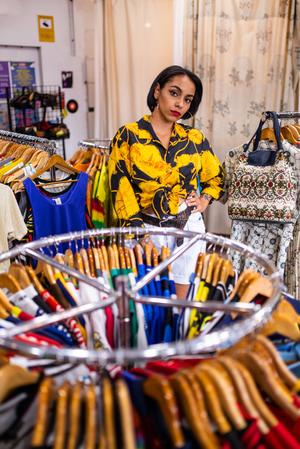
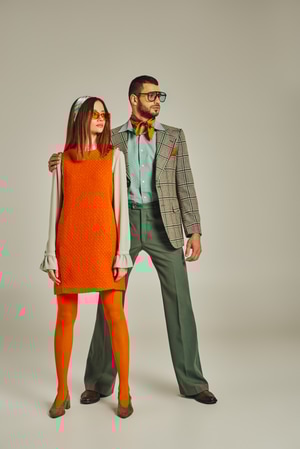
and that’s where we are now in 2025—we’re watching the full scale revival of the most questionable fashion choices from the early 2000s, led by a generation who only know these trends through old episodes of “the simple life” and their older sibling’s embarrassing facebook photos. what we y2k survivors referred to as fashion trauma, gen z refers to as delightful retro flair.
i’m not taking it well.
as someone who lived through the original versions of these trends—someone who owned the rhinestone encrusted going out tops, the layered tank tops, the teeny purses that could only hold lip balm and possibly one credit card—I think i am uniquely qualified to offer warnings to the dangers of these returning fashions. consider this less a trend report and more a survival guide from someone who has seen the fashion apocalypse and lived to tell the story.
let’s begin with the most contentious of the returns: the visible thong. also known as a whale tail (which alone should have disqualified it from ever being a trend), this look involved intentionally wearing your underwear up so high that it could be seen above your low-rise pants. thongs specifically—not just any underwear—because the early 2000s were obsessed with discomfort on a level that bordered on fanaticism.
the original version of this trend saw celebrities such as christina aguilera and halle berry walk red carpet events with bedazzled thong straps prominently displayed above their waistbands. the trend filtered down to high schools across america where girls would sit in class constantly readjusting their underwear to ensure it was visible enough. in hindsight, it was strange, uncomfortable, and probably broke several school dress code rules, but we did it for the culture.
the 2025 version is marginally more acceptable—designer dion lee has created what are essentially fake thong straps sewn onto pants, thereby eliminating the actual uncomfortably of the underwear component while preserving the aesthetic. other designers have incorporated visible straps into dresses and skirts as design elements rather than functional undergarments. it’s still questionable, but at least it’s an intentional aesthetic decision rather than a necessity driven by functionality.
if you are interested in attempting this trend, i recommend opting for pants that have visually interesting seaming or strappy details at the waistband. you’ll achieve the visual interest without having to justify to your grandmother why your underwear is showing at easter dinner. alternatively, reserve visible straps for beach days when they’ll be more contextually relevant with swimwear.
next in line of the y2k nightmare revival is the platform flip flop. not the regular flip flops that are perfectly suitable for summer footwear. no, i’m referring to the foam platform monstrosities that increased height by three inches and provided no ankle support. the shoes that went “slap slap slap” wherever you stepped. the footwear that loudly announced your entrance to a room before you’d even cracked open the door.
i had four pairs in different colours. naturally.
these orthopedic abominations have returned with a vengeance, championed by designers such as versace and steve madden (who, unsurprisingly, was also behind many of the original versions). the new versions have slightly better craftsmanship than the originals, however, they continue to be fundamentally impractical for any activity that requires greater exertion than standing completely still on a completely flat surface.
if you are considering adopting this trend, please choose versions that include an ankle strap. your future physical therapist will be eternally grateful. better yet, opt for the numerous stylish platform sandals that are currently available. these provide height without requiring you to constantly grasp with your toes to keep them on. fashion should not be an olympic event.
perhaps the most surprising y2k revival is the return of the going out top—that standalone shirt designed exclusively for nightlife use and would never, ever be worn outside of nighttime. typically, these shirts included a combination of satin, rhinestones, plunging necklines, and totally extraneous ties and straps. these shirts were designed to be photographed in dimly lit clubs before the advent of smartphones (thankfully).
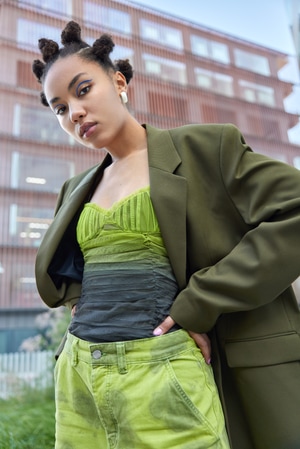
today’s interpretation includes a focus on cropped silhouettes and interesting cut-outs rather than the bedazzled butterfly motifs and crystal lettering across the chest that defined the original. progress, i guess?
if you are thinking about attempting this trend, choose tops that have one statement element rather than 17 competing elements. a single interesting cut-out, an asymmetrical neckline, or a beautiful fabric can convey a lot of energy without crossing the threshold of “trying too hard”. and perhaps you want to ask yourself if your top really needs to include glitter text before you leave the house. (spoiler alert: it doesn’t).
no discussion of cursed y2k trends would be complete without mentioning the denim crimes. beyond the previously mentioned low-rise horrors, we are witnessing the return of additional denim atrocities: denim that isn’t blue (especially white and pastel shades that reveal everything), denim with odd embellishments (embroidery, rhinestones, inexplicable patches), and the most heinous of them all—wearing denim skirts over jeans. an actual layering choice that we collectively agreed upon and now have to admit to our fashion heritage.
“it looks cool in a vintage way,” taylor said with her typical confident air, when she arrived to work wearing a denim skirt over her straight leg jeans last month. she had paired it with a cropped cardigan and looked ridiculously good. as someone who wore this same outfit to my high school spring fling and felt like a denim wrapped potato, i was personally offended.
the main difference that i’ve begrudgingly accepted is in the styling. the current interpretations of these y2k trends are more balanced—the low-rise jeans are paired with oversized tops rather than crop tops, creating proportions rather than simply exposing as much skin as possible. the platform flip flops are worn with streamlined minimalist outfits rather than with every other trend at once. there is a thoughtfulness to the revival that was noticeably missing from the original chaos.
perhaps the most frightening y2k trend reviving itself is the return of the belly button ring, along with its partner-in-crime, the belly chain. these body adornments were ubiquitous in a time when midriffs needed to be visible 24/7 regardless of the temperature, the location, or the decency. i got my navel pierced on my 16th birthday against my mother’s direct orders, only to spend the next five years getting it caught on random items of clothing and eventually allowing it to close up after a particularly grueling encounter with a loofah that i won’t bore you with the details.
now belly button jewelry is back, with celebrities and models once again flaunting their abdominal piercing holes as fashion statements. the 2025 version features more refined and tasteful jewelry than the hot topic surgical steel barbells of yore, but the basic premise is identical—adorn your stomach hole for public viewing.
if you are over 25 and contemplating revisiting this trend, i beg of you to remember the recovery time, the irritation, and the reality that our metabolisms are not as active as they used to be. perhaps opt for a non-permanent belly chain instead? all of the y2k aesthetics without any of the permanence or risk of infection.
what fascinates me most about this y2k revival is watching how a new generation takes the elements of these trends and re-interprets them without understanding the cultural significance that defined them. they’re cherry-picking aspects without carrying the baggage of having lived through the whole nightmare.
“i don’t understand why low-rise jeans are such a big deal,” my 22-year-old niece explained to me recently. “they’re just jeans. if you don’t like them, wear something else.”
and that’s the critical distinction. the first time around, these weren’t merely fashion decisions—they were decrees. if you didn’t wear low-rise jeans in 2003, you simply weren’t participating in current fashion. there was a stifling lack of alternatives that made these questionable trends feel especially impossible to avoid. today, with fashion’s increasingly fractured and individualized landscape, these returning y2k elements exist as options among myriad others. they are a selection, not a mandate.
that being said, i still believe that some trends warranted to be left buried in the collective cultural graveyard. the ultra-thin eyebrows that took years to grow back for an entire generation of women. the bubble dresses that made everyone look like they were hiding a beach ball beneath their clothes. the ties worn as belts, a styling choice that continues to haunt me to this day whenever i view old photos. the chunky blonde highlights that turned us all into victims of an unfortunate accident with a bottle of hydrogen peroxide.
so, how does one successfully navigate this y2k revival without appearing to be dressed in a costume or, worst case, like you haven’t changed your wardrobe since 2003? the secret lies in both selectivity and modernizing. pick one y2k trend and combine it with modern garments. if you decide to attempt low-rise jeans (good luck, brave soul), pair them with a large, structured coat rather than a miniscule baby tee. if you are testing the waters with a going-out top, wear it with modern straight-leg jeans rather than the boot-cut denim of the original era.
also pay attention to the quality and type of fabric used. many y2k trends originated in fast fashion, made from materials that could only survive a single night out. the modern interpretations use superior materials, more thoughtful construction, and more flattering cuts. a satin top in a stunning jewel-toned colour combined with a modern asymmetrical neckline references y2k without screaming “i found this in a time capsule”.
and perhaps the most important thing to consider, is ignoring any trend that you disliked the first time around. fashion should be enjoyable and creative; it should not be a form of temporal penance. if low-rise jeans made you miserable in 2003, they will likely make you miserable in 2025. some traumas do not require re-experiencing.