I’m still mortified about my first proper afternoon tea experience. I picture myself then — 25 years old, looking like I was auditioning for a Jane Austen movie, and sporting (I am actually ashamed to admit this) a teeny-tiny fascinator on my head like a lost bird. I thought I was being suitably dashing. My Grandmother, the birthday girl for her 85th birthday, arrived in perfectly-fitted black slacks and a soft cream-colored cashmere sweater; she looked stylishly effortless while I resembled an additional actor from a period drama who’d mistakenly walked onto the wrong set.
It all started because my mom suggested we treat Grandma to “something really special” for her birthday, and I, for whatever reason, interpreted that as “dress like 1875.” Afternoon tea feels like it should come with its own wardrobe restrictions, right? All of those multi-tiered serving dishes and delicate china cups – how else can you help but dress in a manner similarly ornate?
After attending approximately 40-some afternoon teas (it’s part of the job working with brands that enjoy throwing these events, plus having relatives who believe afternoon tea is the epitome of sophisticated living) I’ve discovered there is an optimal point in between looking like you rolled out of bed and looking like you’re heading to a royal wedding.
Your clothing choice is heavily influenced by the location of the tea. If I’m heading to a traditional high-end luxury hotel – the ones with marble galore and waitstaff who have been employed there since Jimmy Carter’s presidency — I shoot for what I refer to as “polished but not fussy”. So, I pair a quality pair of wide leg wool trousers (I literally live in these from Everlane throughout the fall) with a nice silk blouse or quality knit top. Polished yet unfussy.
I figured this out the hard way after that fascinator debacle. At the subsequent tea I attended, I overcompensated and wore jeans and a tee, assuming I was being refreshingly casual. Incorrect. The looks I received… well let’s just say they were not appreciative ones. There’s an expected amount of effort involved, even if the dress code reads “smart casual” (which, by the way, is the most ambiguous dress code ever created – what does that even mean?).
My current formula is separates that are suitable for a workplace environment, but feel a bit more celebratory. I now use a navy Reformation shirt-dress as my de facto afternoon tea uniform – it’s comfortable enough to allow for the consumption of approximately 17 scones, yet constructed enough to look like I put some effort into it. The fabric is thick enough that it does not wrinkle after I sit for 2 hours (because, let’s face it, nothing destroys the elegance of the afternoon tea experience quicker than having to stand up looking like you’ve been sleeping in your car).
When it comes to footwear, a lot of people screw this up. You’ll be entering these venues, which may include a very intimidating lobby with marble flooring (why is it marble?), therefore you need shoes that won’t cause you to stumble or squeak. I’ve finally found a solution in the form of these block-heeled ankle boots from Nisolo that I can actually walk in, plus they go with almost every piece of clothing. During the warmer months, I replace them with leather flat shoes – comfortable but not overly casual.
At the more modern tea locations (such as those in department stores or the trendy Instagram-based experiences) you can significantly loosen up the guidelines. Last month I attended a fashion-themed tea, where roughly half of the attendees were wearing designer sneakers and vintage band tees. This worked fine. The atmosphere felt more loft-like than ballroom-like, so the overall atmosphere was distinctly different.
Here is something I wish someone had explained to me prior to that disastrous initial tea: it is not about the clothes you wear; it is about appearing put together. Iron your shirt. Wear shoes that don’t look like they belong in a thrift store. Possibly add some jewelry beyond your usual studs. These minor details send the message that you realise this is somewhat of a celebration without going all-out like you’re going to a costume party.
I made plenty of rookie mistakes learning this. There was the time I wore a white shirt to a tea that featured especially runny preserves (disaster). The time I wore a dress with long sleeves that kept getting caught in the clotted cream (disaster). The time I wore my favorite jeans that look great when I’m standing, but create an unfortunate muffin-top situation when I’m seated for extended periods (uncomfortable disaster).
Nowadays, I attempt to think practically as much as aesthetically. You’re going to be sitting at a small table, likely for at least an hour-and-a-half, juggling fragile cups and possibly messy food. Clothing items that hug your body too tightly will become uncomfortable by the third course. Clothing items with trailing sleeves will be liabilities. Clothing items that are cut too low will feel awkward when you lean forward to examine the miniature sandwiches and engage in polite conversation.
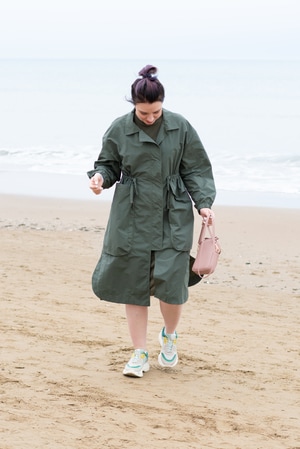
Seasonal considerations also matter. Wintertime teas require a different approach than summertime teas. For example, in colder weather, I enjoy wearing a knit-dress with opaque tights and knee-high boots – warm enough for the season, but still suitable for the occasion. My absolute favorite is this forest green knit-dress from & Other Stories – it’s sturdy enough to feel upscale, yet stretchy enough to accommodate multiple courses of mini-cakes.
Dressing for summertime tea is perhaps more difficult because you want to remain cool but cannot be overly casual. I have found that a midi-skirt with a nice tee-shirt or light weight sweater hits the mark. Structured linen works if it’s the type that doesn’t appear wrinkled immediately after putting it on. I have this striped midi-skirt from Madewell that has become my go-to for summertime tea – it’s comfortable, appears intentional, and the stripes seem to elevate it to a more dressed-up status than a solid colour would.
I find that the accessorizing question confounds everyone. My general guideline is one unique piece – possibly statement earrings or a dramatic necklace – however nothing so dramatic that it eclipses the entire experience. I want to see the person, slightly elevated. I learned this watching my grandmother at that first tea. Her lone pearl necklace and simple gold watch were excellent choices because they added to her natural elegance instead of overpowering it.
Colorwise, I generally stick to colours that I know work on me rather than attempting to match some sort of tea aesthetic. However, I do try to avoid anything too garish or attention-grabbing. The focus should be on the food and the conversation, not on the attire. Although, I will say, there’s something to wearing navy blue or forest green to afternoon tea that just feels correct – classic yet not dull.
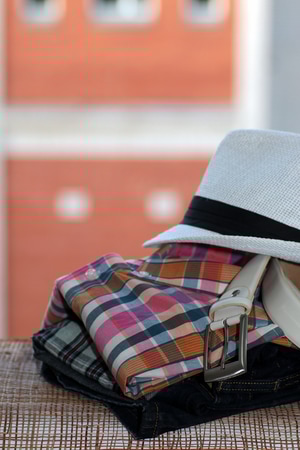
As for the guys who get roped into going to these events, my boyfriend has developed his own tea uniform over the years: dark chinos, button down shirt and leather loafers. He wears a blazer, but typically doesn’t unless the event feels excessively formal. He has successfully worn it to both hotel lobbies and quaint, themed tea locations.
Something I’ve observed is that the most effective tea uniforms are the ones that transform you into a slightly more refined version of yourself. Not like you’re acting a role or wearing a costume, just like you bumped up the volume a notch on your standard style. That’s exactly what my grandmother instinctively grasped – her tea look was virtually indistinguishable from her daily look, only slightly more refined.
I now maintain a few select pieces in my wardrobe for such occasions. Not so formal that I couldn’t wear it in other settings, but sufficiently elevated that I feel properly attired when warranted. It’s greatly reduced the stress factor surrounding what to wear. I no longer panic about what to wear. I no longer worry that I’m overdressed or underdressed.
The largest takeaway from all my afternoon tea misadventures? Leave the costume pieces at home. Fascinators are only acceptable if you’re actually going to the horse racing. Full vintage outfits are only acceptable if that’s what you regularly wear in everyday life. Simply strive for that middle ground between effort and ease, and devote your energy towards the important issues – like whether the jam or cream belongs on the scone. And, yes, I have strong feelings about that topic as well.