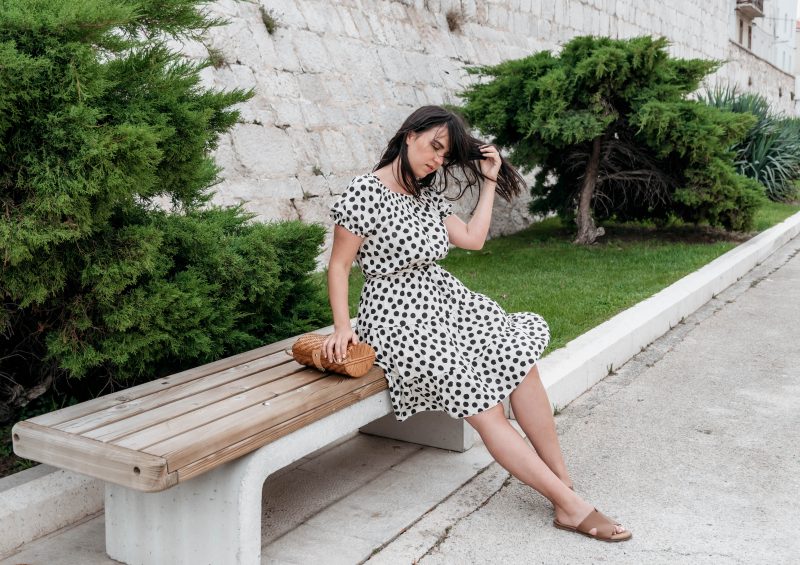
Last Tuesday I was standing in a Zara changing room staring at myself in a polyester dress that cost $29.99, wondering why I felt so gross about the whole situation. Not just because the fabric was making me sweat under those fluorescent lights – though honestly, synthetic materials and department store lighting should be banned under the Geneva Convention. It was this weird feeling like I was betraying myself, you know? Here I am, constantly complaining about fast fashion on Instagram, and yet I was about to buy something that would probably fall apart after three washes.
The dress wasn’t even cute. It had these weird side panels that made me look like I was wearing a geometric math problem, and the zipper felt like it was held on with hope and a single thread. But it was cheap and I needed something for my friend’s birthday dinner and I was being lazy about actually shopping thoughtfully. We’ve all been there, right?
I put the dress back and walked out empty-handed, which felt both disappointing and somehow liberating. Like when you decide not to text your ex – you know it’s the right choice but part of you is still annoyed about having self-control.
That whole experience got me thinking about something I’ve been avoiding for way too long: if I’m going to keep buying clothes, I should probably figure out which British brands are actually doing things differently. Not the ones with “conscious collection” stickers slapped on the same fast fashion model, but companies that built their entire business around not being terrible to people or the planet.
What I found surprised me. There are all these British brands making genuinely gorgeous clothes while actually giving a damn about their supply chain. And I’m not talking about $300 “investment pieces” that are only accessible if you have trust fund money. Real options for those of us living in the real world with real budgets.
Let me tell you about Critically Endangered Socks first, because I know it sounds ridiculous but bear with me. This Glasgow company makes socks from bamboo that are so soft I literally look forward to putting them on in the morning. I bought my first pair – the ones with little pandas – three years ago after seeing them at a pop-up market in Portland. The girl running the booth told me about how each design supports conservation projects and I figured for £12, worst case scenario I’d have overpriced socks with cute animals on them.
Those pandas socks are still going strong. No holes, no weird stretching, just perfect socks that make me smile every time I see them in my drawer. I’ve since added the orangutan ones and some with sea turtles, because apparently I’ve become the kind of person who collects socks with endangered animals on them and I’m weirdly okay with it.
Then there’s Community Clothing, which has this brilliant concept that makes so much sense once you hear it explained. Patrick Grant – yeah, the guy from that sewing show my mom watches religiously – started this social enterprise that works with UK factories during their slow periods. Instead of laying people off seasonally, they keep everyone employed making these really well-made basics.
I bought their navy wool jumper last winter and it’s become my uniform. Meetings, coffee dates, grocery runs, that awkward period between seasons when you don’t know how to dress – this jumper works for everything. At £79 it was definitely an investment for my budget, but I’ve worn it probably twice a week for eight months, so the cost per wear is getting pretty reasonable.
The best part is their website breaks down exactly where your money goes – materials, manufacturing, overhead, profit. It’s refreshingly honest in a way that makes you realize how weird it is that most brands treat their pricing like state secrets.
For when I need something with more personality, Mother of Pearl has become my go-to. Their creative director Amy Powney manages to make clothes that are both statement pieces and totally wearable, which is harder than it sounds. I treated myself to one of their dresses for my birthday last year – navy with these gorgeous pearl buttons that catch the light just right.
It cost more than I usually spend on a single item, which meant I ate a lot of peanut butter sandwiches for lunch the following month, but it’s become my answer to every “I have nothing to wear” crisis. Job interview? Birthday party? Random Tuesday when I want to feel put-together? This dress works for all of it.
What I really appreciate about Mother of Pearl is they don’t pretend sustainability is simple. Their website has this whole section where they’re honest about what they’ve figured out and what they’re still working on. It feels real in a way that “we’re committed to doing better” corporate speak doesn’t.
My weekend bag is from Elvis & Kresse, made from actual decommissioned fire hoses from the London Fire Brigade. I know it sounds gimmicky, but this thing has survived three years of me treating it terribly – stuffed into overhead bins, thrown in the back of cars, used as a pillow on the floor of airports during delayed flights. If anything, it looks better now, like it’s developing character.
The red fire hose material has this amazing texture that people always comment on, and knowing it would have otherwise ended up in a landfill makes me weirdly proud of it. Plus they donate half their profits from the fire hose range to firefighter charities, which feels like the right thing to do.
I never thought I’d care about sustainable sneakers until I discovered Tred trainers. Most eco-friendly shoes look like something a very earnest outdoor education teacher would wear, but these are actually cool. Clean white sneakers that work with everything and happen to be carbon-negative, made partly from recycled plastic bottles.
They’ve survived London rain, festival mud, and that time I accidentally put them in the washing machine at 2am because I wasn’t paying attention. The brand probably wouldn’t recommend the washing machine thing, but they came out looking brand new, so I’m calling it a win.
My latest discovery is Birdsong, this East London brand with the tagline “no sweatshops, no photoshop” that pretty much tells you everything you need to know. They work with women’s charities and community groups to make their clothes, providing fair work for people who often face barriers to employment.
I have their blue boilersuit that’s become my go-to for mornings when I’m running late and can’t figure out what to wear. One zip and I’m dressed, looking intentional even though I definitely threw this on in about thirty seconds. Knowing it was made by women earning London Living Wage in a workshop that supports recovery programs makes wearing it feel even better.

The thing all these brands have in common is they’re making clothes meant to last. Not just physically – though everything I’ve bought has held up way better than anything from fast fashion – but stylistically too. Nothing so trendy it’ll look dated next season, nothing so boring you’ll get sick of it in six months.
Obviously the most sustainable thing is to keep wearing what you already own. My most-worn item is still a pair of vintage Levi’s I found at Goodwill five years ago for twelve bucks. But when you do need something new, it’s nice knowing there are options that won’t make you feel gross about yourself in changing rooms.
I’m definitely not perfect at this. Last month I bought a sweater from Target because I was there anyway and it was cute and cheap, classic impulse purchase behavior. But I’m trying to be more intentional about the bigger purchases, supporting the brands that are actually trying to change how clothes are made instead of just talking about it.
My closet is smaller now but I like everything in it more, if that makes sense. Instead of having thirty mediocre things I wear once and forget about, I have fewer pieces that I actually reach for repeatedly. It’s taken some adjustment – I definitely miss the instant gratification of buying something new every few weeks – but getting dressed is easier when you genuinely like everything you own.

The best part is these brands are proving that sustainable doesn’t have to mean sacrificing style or spending ridiculous amounts of money. You just have to be a bit more thoughtful about it, which honestly feels good after years of mindless consumption. Plus now when people compliment something I’m wearing, I get to tell them about the cool company that made it instead of mumbling “thanks, it’s from Forever 21” and changing the subject.
That Zara changing room moment was probably inevitable – I’d been feeling increasingly weird about fast fashion for months but hadn’t done anything about it. Sometimes you need that moment of clarity where you’re like, okay, I actually have to start putting my money where my mouth is. Even if your mouth talks about sustainability while your wallet shops at Target, we all have contradictions to work through.
But finding these British brands that are getting it right has made shopping feel less gross and more intentional. Like I’m supporting something I actually believe in instead of just feeding the machine that turns out disposable clothes. And honestly, the quality difference is so obvious once you experience it that going back to fast fashion feels like downgrading your entire life.

Madison’s a Portland-based designer who treats thrift stores like treasure hunts. She writes about dressing well on a real salary—think smart buys, affordable finds, and brutal honesty about what’s worth it. Stylish, broke, and proud of it.