That cream cardstock invitation sitting on my kitchen counter in Seattle might as well have been written in code. “Charlotte & James request the pleasure of your company…” followed by all the traditional wording that basically translates to “we have no idea how to help you figure out what to wear.” The ceremony would be at some Norman church in Gloucestershire, reception at “the family home” – which, knowing Charlotte from our university days, could mean anything from a cottage to an actual castle.
I texted her immediately because, you know, I’m an adult now and I refuse to show up looking like I got dressed in the dark. “Scale of one to ten, how fancy is this thing?” Her response was peak Charlotte – “Oh not too formal! Just normal wedding stuff!” – which told me absolutely nothing. This is the same person who described her childhood home as “nothing special really” and then I found out it has a name and appears on tourist maps.
Look, I’ve been to seventeen countryside weddings at this point (yes I keep count, don’t judge), and I can tell you that figuring out the dress code for a summer wedding in the English shires is like trying to solve a puzzle where half the pieces are missing and the box art is just a watercolor of sheep. Too fancy and you look like you’re trying to upstage the bride’s grandmother, too casual and you might as well have rolled up in your gym clothes.
My first attempt was such a disaster it’s still talked about in certain circles. I was twenty-four, convinced my little black city dress would look “sophisticated” among all the flowery countryside types. Added some sky-high heels that immediately started sinking into every surface that wasn’t concrete, which turned out to be most surfaces at a country wedding. Spent the entire day either freezing, falling over, or both. The bride’s grandmother eventually took pity on me and lent me a cardigan that smelled like lavender and golden retriever. Not my finest moment.
But that disaster taught me something crucial – there’s actually a formula to this stuff. Not like everyone needs to look identical, but there are certain principles that the women who seem naturally elegant at these events all understand instinctively. It’s about reading the room, understanding the setting, and preparing for the fact that English weather doesn’t care about your outfit plans.
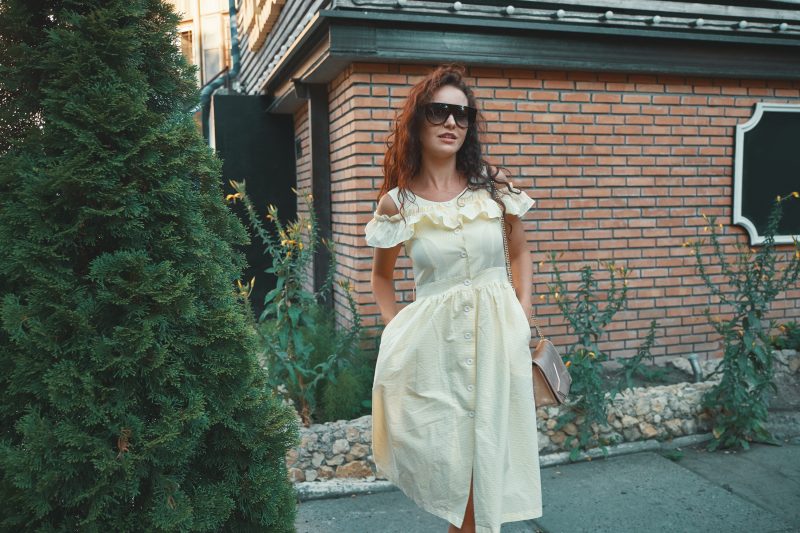
The dress itself is usually the safest bet, unless you’re going for that whole tailored-trousers-and-silk-shirt thing, which can look amazing but requires a confidence level I don’t always possess. You want something that falls somewhere between “garden party” and “church appropriate” – my mum would call it “occasion wear” without a hint of irony. Length-wise, just above the knee to mid-calf works. Mini dresses make you look like you’re confused about what event you’re attending, and full-length can seem like you’re angling for a bridesmaid role nobody offered you.
Colors are tricky territory. Black feels too funeral-y in a country church setting, though a black base with bright patterns can work. Obviously no white or cream because we’re not monsters. Very pale pastels are risky if there’s a traditional bridal party – you don’t want to accidentally blend in with the wedding party photos. I’ve had good luck with bright jewel tones – emerald green, cobalt blue, that deep raspberry pink that photographs beautifully against all that countryside green.
The fabric choice is where you separate the veterans from the first-timers. You need something breathable enough for unexpected heat waves but substantial enough to not become see-through in surprise downpours. Because this is England, and weather predictions are more like weather suggestions. I learned this the hard way when a gorgeous silk dress turned into a sweat trap during an unusually hot July ceremony. Cotton, linen blends, anything that can actually breathe – these are your friends.
Shoes, oh my god, shoes. This is where I see the most casualties at country weddings. Those needle-thin heels that make you look like a graceful gazelle on city sidewalks? They turn you into a lawn aerator at countryside venues. I watched a woman at a Cotswolds wedding last year spend the entire cocktail hour stuck in one spot because every time she tried to move, her heels just drove deeper into the grass.
I finally invested in these nude suede block heels with ankle straps – 2.5 inches high, wide enough base to actually distribute weight, padded enough that I can dance until midnight without wanting to amputate my feet. They’ve carried me through seven weddings without a single incident. Pro tip: those little plastic heel protectors that slip over stilettos are absolute genius for grass situations. Keep them in your bag and nobody has to know you’re basically cheating at countryside elegance.
The weather contingency planning is where amateurs reveal themselves. Your outfit might look perfect in your bedroom, but if you spend the reception shivering in someone else’s waxed jacket, the whole effect is kind of ruined. I’ve developed this layering system that probably makes me look slightly neurotic, but whatever – I’d rather be prepared than sorry.
A good blazer in a complementary color is the foundation. Structured enough to look intentional, easy to remove if the sun comes out. I keep a large silk scarf for medium-level weather drama, and what I call my “emergency cardigan” – slim merino in navy that folds down to nothing but can save you from genuine cold snaps. The truly prepared countryside wedding guest thinks in terms of graduated warming options.
For bags, crossbody beats clutch every single time, especially if you’re dealing with multiple venues or any kind of transport between ceremony and reception. Needs to fit the essentials – phone, lipstick, blister plasters (crucial), emergency flats (more on this), tissues, paracetamol, antihistamines because country gardens in summer are basically pollen bombs waiting to explode.
I also pack this tiny fold-up shopping bag which sounds completely ridiculous but has saved me countless times when you suddenly need to carry ceremony programs, wedding favors, or that piece of cake the bride’s aunt insisted you take home. You’d be amazed how many people end up clutching random wedding debris because they have nowhere to put it.
The hat situation is… complicated. Older generations and mother-of-bride types often go full traditional hat, but for those of us under forty, it’s more about reading the specific wedding’s formality level. A simple fascinator if you’re into that sort of thing, or maybe a statement headband or hair accessory. Better to have something for the church service than nothing at all – you can always ditch it for the reception if you feel overdressed.
Emergency kit is non-negotiable at this point. Blister plasters obviously, but also safety pins (hem disasters happen), mini sewing kit, deodorant, tissues, basic medications. And those emergency flat shoes I mentioned – fold-up ballet flats that fit in your bag. After watching a friend walk home barefoot because her heels had literally destroyed her feet, I never attend a wedding without backup footwear.
Makeup needs to survive multiple lighting situations throughout the day – harsh church lighting, bright outdoor sun, potentially terrible marquee illumination. Good primer, long-wear foundation that won’t transfer when you hug people, waterproof mascara because even if you’re not usually a wedding crier, there’s something about country churches and traditional vows that gets to you.
Charlotte’s wedding turned out exactly as contradictory as I’d expected. Vintage cars next to guests in Wellington boots, Michelin-level catering followed by espresso martinis served from a converted horse trailer, string quartet transitioning seamlessly into a band whose lead singer had apparently been on some reality show. Peak countryside wedding energy.
I went with this sage green silk-cotton midi – fitted bodice, slightly fuller skirt, and blessed pockets – my reliable nude block heels, cream blazer for church, gold statement earrings, and a bag just big enough for my survival kit. When the temperature dropped after sunset (because of course it did), I was smugly prepared with my cardigan while watching other guests shiver through the cake cutting.
The mother of the groom, who I’d never met, came up to me during dinner. “You look lovely,” she said, then leaned in slightly, “and practical. So many young women don’t think these things through properly.” Coming from someone in an impeccable shift dress and matching jacket, this felt like receiving some kind of countryside wedding knighthood.
There’s definitely irony in spending this much mental energy on looking effortlessly appropriate. The perfect guest outfit should seem like you just naturally owned exactly the right thing, not like you conducted the fashion equivalent of military intelligence gathering. But maybe that’s what good style actually is – making careful planning look completely natural.
By the time I was dancing with Charlotte’s university friends at one in the morning, shoes safely stashed in my bag rather than lost in the darkness somewhere, I caught my reflection in the marquee window. I looked right for the setting without trying too hard, dressed up but comfortable, appropriate but not constrained.
It only took a decade, multiple fashion disasters, and the kind of detailed preparation usually reserved for international espionage, but I’d finally figured it out. The bride’s grandmother from that first disastrous wedding would’ve been proud – I’d learned, just like she said I would.

Riley’s an environmental consultant in Seattle with strong opinions on greenwashing and fast fashion. She writes about sustainability without the guilt trip—realistic tips, honest brand talk, and a reminder that progress beats perfection.