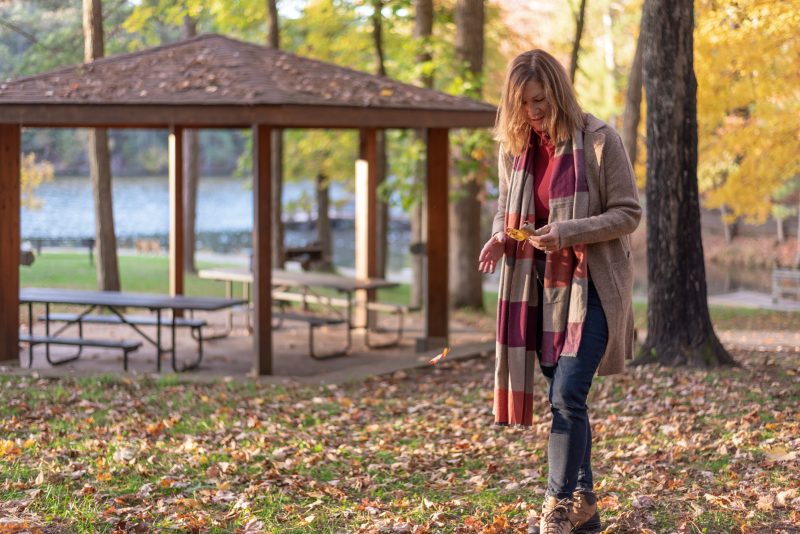
You know that moment when summer officially gives up the ghost and you’re suddenly standing outside in what feels like a completely different climate zone? Yeah, that happened to me last week. One day I’m complaining about how hot the MAX train is, the next I’m shivering at the bus stop in a cotton sundress like some kind of seasonal amnesia victim. Portland weather is weird, but at least it’s predictably weird – unlike back when I lived through actual British autumns during my study abroad year in Edinburgh. That experience basically trauma-bonded me to proper layering techniques, though it took me years to actually apply what I learned.
I used to be absolutely terrible at seasonal transitions. Like, catastrophically bad. My junior year of college, I’d still be wearing flip-flops in November because I was in denial about needing closed-toe shoes (and because decent boots cost money I didn’t have). I remember one particularly humbling October morning when I showed up to my internship soaking wet because I’d convinced myself that light drizzle didn’t require an umbrella. My supervisor took one look at me dripping in the lobby and sent me home to change. Mortifying doesn’t even begin to cover it.
But here’s the thing I’ve figured out after years of making expensive mistakes and learning from people who actually know what they’re doing – autumn layering isn’t just about staying warm. It’s about creating a system that works when you’re broke, when the weather can’t make up its mind, and when you need to look somewhat professional despite owning approximately three decent pieces of outerwear.
The whole “invest in quality basics” advice that gets thrown around fashion blogs? That’s fine if you’ve got a trust fund, but most of us are working with Target budgets and trying to make it look intentional. I’ve spent the last five years perfecting what I call the “broke person’s layering system,” and honestly, it works better than some of the expensive setups I see fashion influencers pushing.
My base layer strategy is pretty simple – I live in these ribbed long-sleeve tops from Uniqlo’s Heattech line. They’re like $15 each, they actually keep you warm without being bulky, and they don’t get weird and stretched out after a few washes like cheaper thermal layers do. I bought five of them in neutral colors during an end-of-season sale two years ago, and they’re still going strong. My friend Rachel makes fun of me for wearing “old lady thermals,” but she’s the one who’s always cold in her crop tops, so I’m not taking fashion advice from her.
Over that goes what I think of as the “personality layer” – the thing that makes your outfit look like you actually chose it rather than just grabbed whatever was cleanest. For me, this is usually a thrifted button-down (I have an ongoing obsession with finding men’s oxford shirts at Goodwill – they’re better quality and cost the same $4 as women’s shirts), or one of my two good sweaters. And I mean two literally. I have a charcoal wool pullover from COS that I saved up for and bought full-price like three years ago, and a cream cashmere cardigan my mom gave me that’s older than I am but somehow still perfect. When you only have two nice sweaters, you get very strategic about when to wear them.
The outer layer is where things get complicated, because this is where you need something that actually works but also doesn’t make you look like you’re headed to an Arctic expedition. I spent years cycling through cheap jackets that either didn’t keep me warm or fell apart after one season, until I finally bit the bullet and bought a proper wool coat. Not gonna lie, it was painful financially – I put it on my credit card and ate ramen for like two weeks – but it’s been worth every penny. It’s this classic double-breasted style in navy that goes with everything, and wearing it makes me feel like I have my life together even when I definitely don’t.
Here’s something nobody tells you about building a layering system on a budget – accessories are your secret weapon. A good scarf can completely transform a basic outfit, and if you shop smart, you can find incredible ones secondhand. My best thrift store find ever was this massive plaid wool scarf that someone probably got as a gift and never wore. It cost me six dollars and it’s single-handedly elevated every autumn outfit I’ve worn for the past three years. I’ve literally had strangers ask where I got it, and I just smile mysteriously instead of admitting it came from the Salvation Army on 82nd.
The footwear situation used to stress me out so much. Cute boots are expensive, practical boots are ugly, and waterproof boots are both expensive and ugly. I finally solved this by accepting that I needed two pairs minimum – one that looks good and one that actually functions. My “looks good” boots are these ankle boots from Zara that I bought on clearance and have now resoled twice because I wear them constantly. My “actually functions” boots are these completely unglamorous waterproof hiking boots that I bought at REI during their member sale. Do they go with my carefully curated aesthetic? Absolutely not. Do they keep my feet dry during Portland’s endless drizzle months? You bet they do.
I learned the hard way that trying to make one pair of shoes work for every weather situation is a recipe for disaster. Last year I ruined a pair of suede ankle boots by wearing them in the rain exactly once. One downpour and they went from “stylish ankle boot” to “sad, water-damaged shoe that makes squeaky noises.” I tried every internet hack to restore them – the blow dryer trick, the newspaper stuffing, even that weird steaming method someone on TikTok swore by. Nothing worked. They now live in my closet as a $80 reminder to check the weather forecast.
The thing about layering that took me forever to understand is that it’s not just about temperature – it’s about adaptability. Portland weather is moody as hell. It’ll be sunny when you leave for work, raining by lunch, and weirdly warm again by happy hour. Having a system that lets you add and remove pieces without looking like you’re having a wardrobe malfunction is crucial, especially when you’re spending your day in different environments.
My coworker Jess has this down to a science. She always looks perfectly dressed for whatever the weather throws at us, and I finally asked her what her secret was. Turns out she checks the hourly forecast every morning and plans her layers accordingly, plus she keeps a cardigan and umbrella at the office year-round. It sounds obsessive, but honestly, she’s never the person shivering in the break room or sweating on the walk to lunch, so maybe the rest of us should take notes.
The texture game is where you can really make budget layering look expensive. Mixing different fabrics and weights adds visual interest when you’re working with a limited color palette (which, let’s be honest, most of us are when we’re shopping secondhand and trying to make everything work together). I’ve gotten really good at finding interesting knits at thrift stores – chunky cardigans, cable-knit sweaters, even the occasional cashmere piece that someone donated without realizing what they had.
My favorite layering combination right now is one of those Uniqlo base layers, a vintage flannel shirt I found at Buffalo Exchange, and my good wool coat. It sounds basic, but the flannel has this amazing worn-in softness and the colors work perfectly with the navy coat. Total cost for the whole outfit was under $100, but it looks way more expensive than that. The trick is making sure everything fits well – even cheap clothes look better when they’re the right size.
One thing I wish someone had told me earlier is that building a good layering wardrobe takes time, and that’s okay. You don’t need to buy everything at once (and honestly, you shouldn’t, because you’ll make mistakes). I’ve been slowly building my autumn wardrobe for five years now, adding one or two key pieces each season when I find something great or when something wears out. It’s more sustainable financially and environmentally, plus you end up with pieces you actually love instead of just settling for whatever’s available.
The other thing is that your layering system should work for your actual life, not some Instagram-worthy version of your life. I used to buy clothes based on how I thought I should dress rather than how I actually live. Turns out, delicate sweaters that need to be hand-washed don’t work when you’re doing laundry at a laundromat once a week. Neither do light-colored coats when you’re commuting on public transit. Learning to dress for reality instead of fantasy has made getting dressed so much easier.
So here’s my advice for anyone trying to master autumn layering on a budget – start with one really good base layer system, invest in one coat that makes you feel amazing, and then slowly build around those foundations. Don’t try to recreate entire Pinterest boards overnight. And for the love of all that’s holy, buy the waterproof boots before you need them. Your future self will thank you when you’re the only person at the bus stop with dry feet.

Claire started Claire Wears to bridge the gap between fashion media and real life. Based in Chicago, she writes with honesty, humor, and a firm “no” to $300 “affordable” shoes. Expect practical advice, strong opinions, and the occasional rant about ridiculous trends.